
Phyllophaga vehemens
(Horn, 1887)
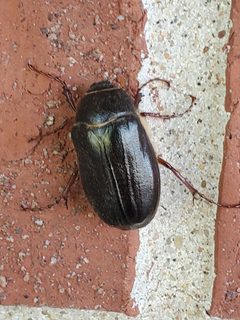
Phyllophaga vehemens is a of scarab beetle in the Scarabaeidae, commonly known as a May beetle or June beetle. It occurs in North America, with documented records from multiple U.S. states across the Midwest and South. The species has been identified as an intermediary for the giant thorn-headed worm of swine (Macracanthorhynchus hirudinaceus), an acanthocephalan . As with other Phyllophaga species, are likely and attracted to lights.

Pronunciation
How to pronounce Phyllophaga vehemens: //ˌfɪloʊˈfeɪɡə ˈvɛhɪmɛnz//
These audio files are automatically generated. While they are not always 100% accurate, they are a good starting point.
Images
Distribution
Documented from the United States: Indiana, Iowa, Kansas, Mississippi, Nebraska, South Carolina, South Dakota, Texas, and Wisconsin. Occurs in the Nearctic region.
Host Associations
- Macracanthorhynchus hirudinaceus - intermediary Giant thorn-headed worm of swine; an acanthocephalan . P. vehemens serves as an intermediary in the parasite's .
Human Relevance
Documented as an intermediary for Macracanthorhynchus hirudinaceus, a of swine. This association may have veterinary significance in regions where both the and infected swine occur.
Similar Taxa
- Phyllophaga cribrosaAnother flightless Phyllophaga with superficially similar dark coloration, but P. cribrosa has distinct longitudinal elytral furrows and is restricted to Oklahoma and Texas.
- Other Phyllophaga species identification within Phyllophaga is notoriously difficult and often requires examination of male and female genitalia; P. vehemens is distinguished by specific morphological characters not detailed in available sources.
More Details
Taxonomic note
The Phyllophaga contains over 400 in North America, making it one of the most species-rich genera in the North American fauna. Species-level identification is challenging and typically requires examination of genitalia.
Parasite host significance
The documentation of P. vehemens as a for Macracanthorhynchus hirudinaceus was noted in a 1927 publication in Annals of the Entomological Society of America, adding this to the known host list for the giant thorn-headed worm of swine.
Sources and further reading
- BugGuide
- Wikipedia
- GBIF taxonomy match
- iNaturalist taxon
- Bug Eric: The American Pelecinid Wasp
- Bug Eric: Wasp Wednesday: Myzinum
- May | 2016 | Beetles In The Bush
- Acrididae | Beetles In The Bush | Page 4
- economic pests | Beetles In The Bush
- The “black bringer of light” | Beetles In The Bush
- Another Intermediary Insect Host of the Giant Thorn-Headed Worm of Swine* Phyllophaga vehemens Horn (Scarabaeidae) New to the Host List of this Parasite