
Rhizotrogini
Burmeister, 1855
Genus Guides
6- Amphimallon(Summer Chafers)
- Fossocarus
- Gronocarus(lobed spiny burrowing beetle)
- Listrochelus
- Phyllophaga(May beetles)
- Triodonyx
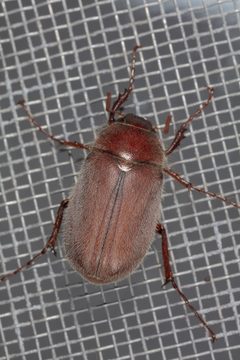
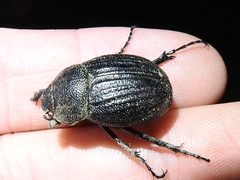
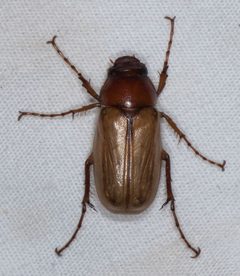
Rhizotrogini is a tribe of scarab beetles within the Melolonthinae, established by Burmeister in 1855. The tribe contains distributed across the Palearctic region, including Europe, North Africa, and Asia. Several genera within Rhizotrogini contain of agronomic importance, particularly in India where members are considered June beetles. The tribe has been subject to recent taxonomic revision, with species reclassified between genera and new species described from biogeographically significant regions such as Sardinia and Iran.
Pronunciation
How to pronounce Rhizotrogini: //ˌraɪzoʊˈtrɒdʒɪnaɪ//
These audio files are automatically generated. While they are not always 100% accurate, they are a good starting point.
Images
Distribution
Rhizotrogini has a Palearctic distribution. The Rhizotrogus occurs in southwestern Europe, including Sardinia (Italy), Corsica (France), and Capraia Island (Tuscany). The genus Chilotrogus is distributed in Iran. In India, genera including Brahmina, Eotrichia, Holotrichia, and Sophrops are present, with Panotrogus and Pseudopanotrogus recorded from Uttarakhand.
Human Relevance
Members of certain within Rhizotrogini, particularly in India, have been noted as having agronomic importance. Light trap surveys have been employed to monitor distribution patterns and assess their impact.
Sources and further reading
- BugGuide
- iNaturalist taxon
- Catalogue of Life
- Review of the genus Chilotrogus Reitter (Coleoptera: Scarabaeidae: Melolonthinae: Rhizotrogini) in Iran with description of two new species
- First Record of Three Species of Genera Panotrogus Reitter, 1902 and Pseudopanotrogus Petrovitz, 1969 (Coleoptera; Scarabaeidae; Rhizotrogini) from India
- Rhizotrogus ruzzantei, a new species from southwestern Sardinia (Italy), with biogeographic considerations on the Sulcis-Iglesiente subregion and Scarabaeoidea endemics of Sardinia (Coleoptera: Scarabaeidae: Melolonthinae: Rhizotrogini)