
Hemiphileurus illatus
(LeConte, 1854)
Lesser Triceratops Beetle
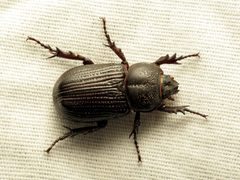
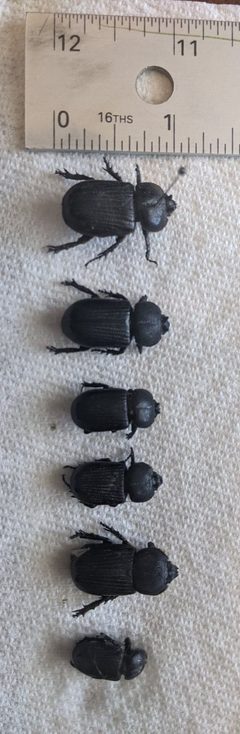
Hemiphileurus illatus is a rhinoceros beetle in the Dynastinae, known as the lesser triceratops beetle. are black, 19–25 mm long, with a pitted and two cephalic horns—smaller in females. Unlike its Phileurus truncatus, it lacks a third horn. The is native to the southwestern United States and is attracted to UV light.
Pronunciation
How to pronounce Hemiphileurus illatus: /hɛmɪˈfaɪljʊrəs ɪˈleɪtəs/
These audio files are automatically generated. While they are not always 100% accurate, they are a good starting point.
Identification
Distinguished from Phileurus truncatus (triceratops beetle) by the absence of a third cephalic horn in both sexes. The smaller, reduced female horns (bumps or nubs versus more developed structures in P. truncatus females) and generally smaller body size further separate the two . The pitted is shared with P. truncatus and not diagnostic alone.
Images
Habitat
Found in urban and rural environments of the southwestern United States. In urban settings, frequently associated with compost heaps. Occupies oak/juniper woodland as evidenced by light trap collections.
Distribution
Southwestern United States: primarily Arizona, Nevada, New Mexico, and California.
Seasonality
have been collected at lights in late July, suggesting peak activity during summer months. Specific beyond this observation is not documented.
Diet
are and scavengers, consuming fresh or rotting plant material and dead insects. In captivity, they accept freshly killed , fruits, and vegetables, showing preference for protein sources including insect prey and .
Life Cycle
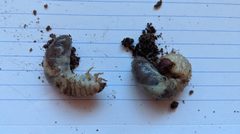
Complete with documented larval and pupal stages. Larvae are subterranean. Duration of developmental stages and number of per year are not established.
Behavior
Both and larvae are , spending most of their time underground. Adults are and attracted to UV light. Capable of stridulation, producing a quiet audible chirp when agitated. In captivity, generally compatible with conspecifics and other insect , though may prey upon wounded, vulnerable, or individuals including , larvae, and pupae.
Ecological Role
Contributes to nutrient cycling through detritivory and scavenging. Subterranean burrowing activity likely influences soil structure.
Human Relevance
Not an agricultural pest; poses no significant danger to humans or domestic animals. Legal to own and sell. Low maintenance in captivity but not highly sought after in the -keeping .
Similar Taxa
- Phileurus truncatusLarger with a prominent third horn in both sexes; female horns more developed than in H. illatus. Both share pitted and southwestern distribution.
More Details
Captive Husbandry Notes
In captivity, can be maintained communally or with other insect with relatively low risk of aggression, though of vulnerable life stages may occur.
Stridulation
produce sound via stridulation when disturbed, a documented in few Dynastinae .