
Glaresis
Erichson, 1848
Enigmatic Scarab Beetles
Species Guides
5Glaresis is a of small beetles in the Glaresidae, commonly called "enigmatic scarab beetles." These beetles are closely related to Scarabaeidae but are placed in their own family based on distinctive morphological features. are and have been collected at lights in arid and sandy worldwide except Australia. The larvae and most aspects of their remain unknown despite unsuccessful laboratory rearing attempts in the 1980s.
Pronunciation
How to pronounce Glaresis: //ɡlæˈreɪsɪs//
These audio files are automatically generated. While they are not always 100% accurate, they are a good starting point.
Identification
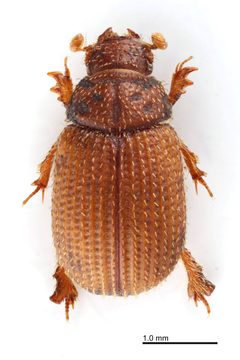
Distinguished from other scarabaeoid beetles by its combination of small size (under 6 mm), stocky build with short spurred legs, and covering of short setae. The Glaresidae is separated from Scarabaeidae by primitive characteristics and lack of clear affinities to other primitive scarabaeoid groups. -level identification requires examination of middle and hind tibiae characters. Distinguished from Trogidae by morphological differences despite historical classification together.
Images
Appearance
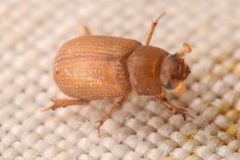
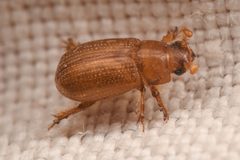
Small beetles measuring 2.5–6 mm in length with a stocky, compact build typical of scarabs. Body color ranges from tan to dark brown. The surface is covered with short setae. Legs are short, heavy, and bear spurs adapted for digging. Middle and hind tibiae possess distinctive characters used in identification.
Habitat
Arid and sandy areas worldwide. Narrow associations result in many occupying extremely limited geographic areas.
Distribution
Worldwide distribution in arid and sandy regions except Australia. Documented from Palaearctic, Afrotropical, and Nearctic realms. North American distribution expanded by recent discoveries.
Seasonality
are and have been collected at lights; specific seasonal activity patterns are not documented.
Life Cycle
Unknown. Larval stages have never been collected despite targeted efforts. Laboratory rearing attempts in the 1980s by C. H. Scholtz and colleagues were unsuccessful.
Behavior
. are attracted to lights. habits inferred from leg but not directly observed.
Human Relevance
Subject of taxonomic research due to phylogenetic significance as potentially the most primitive scarabaeoid lineage. Many are imperiled by destruction due to their narrow habitat associations and limited geographic ranges.
Similar Taxa
- TrogidaeHistorically classified together and shares some primitive scarabaeoid characteristics, but separated based on distinct morphological features and lack of clear affinities.
- ScarabaeidaeFormerly included in this but separated into its own family Glaresidae based on primitive characteristics and unique morphological features.
- PleocomidaeBoth considered candidates for most primitive scarabaeoid lineage; recent research indicates Pleocomidae may hold this position over Glaresis.
More Details
Taxonomic History
Originally classified with Trogidae as a within Scarabaeidae. Scholtz argued Glaresis represents the most primitive scarabaeoid, though more recent research suggests Pleocomidae holds this position. Recent work indicates possible placement within Trogidae.
Research Challenges
remains largely unknown due to inability to collect larvae or successfully rear specimens in laboratory conditions. All knowledge based on specimens alone.
Conservation Concern
Narrow specialization and limited geographic ranges make many vulnerable to habitat destruction.