
Glaresidae
Preudhomme de Borre, 1886
Enigmatic Scarab Beetles
Genus Guides
1- Glaresis(Enigmatic Scarab Beetles)
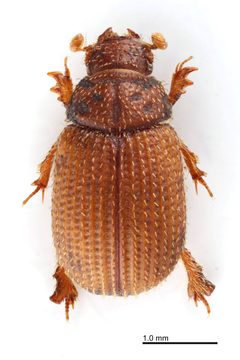
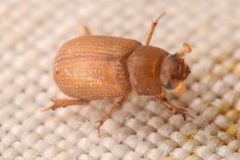
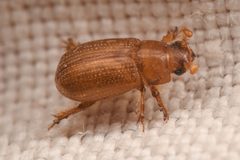
is a small of scarabaeoid beetles, commonly known as "Enigmatic Scarab Beetles," containing the single Glaresis. The family was formerly classified within Scarabaeidae but is now recognized as a distinct, early-diverging lineage within the superfamily Scarabaeoidea. Members are small, compact beetles found in arid and sandy environments worldwide except Australia. Despite their wide distribution, their remains poorly understood.
Pronunciation
How to pronounce Glaresidae: /ɡlaˈrɛsɪdae/
These audio files are automatically generated. While they are not always 100% accurate, they are a good starting point.
Identification
can be distinguished from other scarabaeoid by their small size, compact body form, and reduced wing venation. They lack the distinct antennal clubs characteristic of many Scarabaeidae. The family is monogeneric (Glaresis), and identification requires examination of subtle morphological features, often involving male genitalia.
Images
Habitat
Arid and sandy environments, including sand dunes and sandy soils in dry regions.
Distribution
Worldwide in arid regions except Australia. Records include North America, South America, Europe, Asia, and Africa.
Seasonality
are and have been collected at lights, suggesting nighttime activity. Specific seasonal patterns are not well documented.
Life Cycle
Larvae and stages remain unknown. Developmental has not been described.
Behavior
are and attracted to lights. They are rarely encountered, suggesting either cryptic habits or low densities.
Ecological Role
Ecological role is undetermined due to lack of knowledge about feeding habits and larval .
Human Relevance
No significant direct interactions with humans. Occasionally encountered by entomologists in light-trap surveys in arid regions.
Similar Taxa
- ScarabaeidaeFormerly included within Scarabaeidae; distinguished by reduced wing venation, lack of well-developed antennal , and more compact body form.
More Details
Taxonomic History
was elevated from status within Scarabaeidae to rank based on phylogenetic studies showing it represents an early-diverging lineage of Scarabaeoidea.
Biological Mystery
The complete absence of larval specimens and data makes Glaresis one of the most poorly known relative to its geographic distribution. The specific requirements that limit collection to remain unexplained.