
Cercyon
Leach, 1817
water scavenger beetles
Species Guides
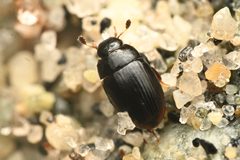
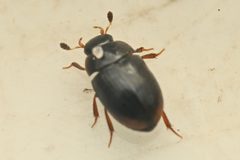
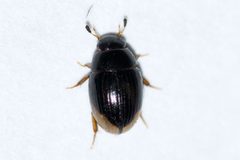
31Cercyon is a of small water scavenger beetles in the Hydrophilidae, Sphaeridiinae, with at least 50 described worldwide. The genus is predominantly terrestrial despite its family name, with species frequently associated with decaying organic matter and . Species occur across multiple continents including North America, the Caribbean, Europe, Asia, and Africa, with some species being (introduced) outside their native ranges. Taxonomic studies have revealed cryptic distinguishable only by male genitalia and sequences.
Pronunciation
How to pronounce Cercyon: //ˈsɜːs.i.ɒn//
These audio files are automatically generated. While they are not always 100% accurate, they are a good starting point.
Identification
Identification to level often requires examination of male genitalia and sequences, as some species form morphologically similar complexes (e.g., C. armatipenis, C. gimmeli, and C. taino in the Greater Antilles). The Sphaeridiinae, to which Cercyon belongs, is characterized by terrestrial habits distinct from the aquatic habits of other Hydrophilidae. Species in the C. nigriceps-group and C. olibrus/rotundulus groups have been defined by specific morphological characters in regional revisions.
Images
Habitat
Predominantly terrestrial; frequently associated with decaying plant material and . occur in diverse environments from the Russian Far East to Caribbean islands, including montane , forests, and disturbed areas. Some species occupy wet meadows and successional habitats.
Distribution
distribution with native and . Recorded from: Greater Antilles (Cuba, Dominican Republic, Jamaica, Puerto Rico, Cayman Islands), southeastern United States, Russia and adjacent regions (including Russian Far East), Myanmar, Malta, Ukraine, Gambia, Nepal, China (Guizhou), British Isles, Denmark, Norway, Colombia. Some widely distributed in the New World; others are adventive Palearctic (C. quisquilius) or probable Oriental origin (C. nigriceps).
Life Cycle
Larvae have been associated with using COI barcode sequences for at least two (C. insularis and C. taino), confirming larval and development. Complete details are not well documented for most species.
Ecological Role
Associated with decomposition processes through occurrence in decaying plant material and . Role in nutrient cycling in terrestrial , though specific functions are not well studied.
Human Relevance
Some are and have been transported beyond their native ranges, including Palearctic species established in the New World. No significant agricultural or medical importance documented.
Similar Taxa
- Other Hydrophilidae (aquatic subfamilies)Most Hydrophilidae are aquatic, whereas Cercyon (Sphaeridiinae) is predominantly terrestrial, associated with decaying matter rather than freshwater .
- Other Sphaeridiinae generaWithin the same , Cercyon is distinguished by specific combinations of morphological characters and male genitalia structure; cryptic within Cercyon itself require or genitalic examination for separation.
More Details
Taxonomic Complexity
The contains cryptic where morphologically similar are distinguishable only by male genitalia and sequences, as demonstrated in the Greater Antilles fauna.
Conservation Concern
While the Cercyon is widespread, the genus Cercyonis (unrelated, in Nymphalidae) contains of conservation concern, such as Cercyonis incognita (Bald Hills Satyr), which may have been driven to extinction by 2020 California wildfires. These are separate despite similar names.
Sources and further reading
- BugGuide
- Wikipedia
- GBIF taxonomy match
- iNaturalist taxon
- NCBI Taxonomy
- Catalogue of Life
- Rising from the Ashes--Some Day | Bug Squad
- Review of species of the genus Cercyon Leach, 1817 of Russia and adjacent regions. V. Subgenus Cercyon Leach, 1817. Cercyon nigriceps-group (Coleoptera: Hydrophilidae)
- Review of species of genus Cercyon Leach, 1817 of Russia and adjacent regions. II. Subgenus Cercyon Leach, 1817. Cercyon olibrus and C. rotundulus groups (Coleoptera: Hydrophilidae)
- A review of the Cercyon Leach (Coleoptera, Hydrophilidae, Sphaeridiinae) of the Greater Antilles