
Megasternini
Mulsant, 1844
Genus Guides
7- Agna
- Cercyon(water scavenger beetles)
- Cryptopleurum
- Deltostethus
- Megasternum
- Oosternum
- Tectosternum
Megasternini is the largest tribe of terrestrial water scavenger beetles (Coleoptera: Hydrophilidae), with approximately 600 described worldwide. The tribe is divided into two subtribes—Megasternina and Oosternina—distinguished by male genitalia and surrounding . Molecular phylogenetic studies reveal a complex biogeographic history involving multiple intercontinental events during the Paleocene-Eocene Thermal Maximum. The tribe exhibits its highest in tropical regions across all continents.
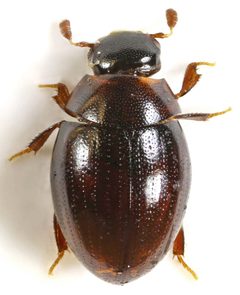
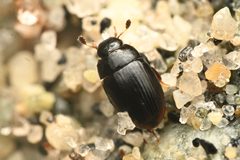
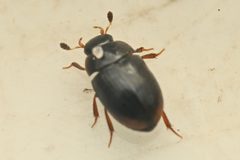
Pronunciation
How to pronounce Megasternini: /ˌmɛɡəˈstɜrnɪnaɪ/
These audio files are automatically generated. While they are not always 100% accurate, they are a good starting point.
Identification
Megasternini can be distinguished from other Hydrophilidae tribes by the combination of terrestrial habits and specific male genitalia . Within the tribe, two subtribes are recognized: Megasternina and Oosternina, separated by the structure of male genitalia and surrounding . The metaventrite with complete femoral lines crossing arcuate ridges serves as a diagnostic character for certain such as Peltocercyon. Many genera within Megasternini—including Cercyon, Oosternum, Cetiocyon, Australocyon, and Pelosoma—are not monophyletic based on current molecular evidence, complicating identification at the genus level.
Images
Habitat
Members of Megasternini are primarily terrestrial, inhabiting decaying organic material. Some occur in cave environments with underground rivers and pools, though their status as truly aquatic or subterranean remains uncertain. The tribe shows to moist microhabitats associated with decomposition.
Distribution
Worldwide distribution with highest in tropical areas of all continents. Documented from Asia (China, Laos, Indonesia, Philippines, Malaysia, Vietnam, India, Cambodia, Myanmar, Japan), the Americas, Australia, Africa, and Europe including Turkey. Historical biogeographic analyses indicate of South America from Australia approximately 90 million years ago and at least five events between Asia and North America via the Beringia land bridge during the Paleocene-Eocene (63–55 million years ago).
Similar Taxa
- Other Hydrophilidae tribesMegasternini is distinguished from other tribes in the by its primarily terrestrial habits, whereas most Hydrophilidae are aquatic. The subtribal division (Megasternina vs. Oosternina) is unique to this tribe and based on male genitalia .
More Details
Phylogenetic structure
Molecular reveals 12 principal clades within Megasternini: three in Oosternina and nine in Megasternina. These clades group largely by geographic distribution rather than , indicating of morphological characters across lineages. The Cercyon, the most diverse in the tribe, is distributed across all principal clades in both subtribes, necessitating future reorganization of generic concepts.
Historical biogeography
The tribe's evolutionary history includes repeated continental interchange during warm climate periods. The Asia-America faunal interchange (63–55 mya) coincided with the Paleocene-Eocene Thermal Maximum, when tropical and subtropical biomes expanded toward polar regions. Diversification analyses show no effect of intercontinental dispersals on speciation or extinction rates, but suggest possible influence of declining global temperatures over the last 20 million years.
Sources and further reading
- BugGuide
- Wikipedia
- iNaturalist taxon
- Catalogue of Life
- Taxonomic Revision and Phylogeny of the Genus Peltocercyon d'Orchymont, 1925 (Coleoptera: Hydrophilidae: Megasternini)
- First record of Cercyon (s. str.) inquinatus Wollaston, 1854 from Turkey with notes about this problematic species (Coleoptera: Hydrophilidae: Sphaeridiinae: Megasternini)
- Molecular phylogeny of Megasternini terrestrial water scavenger beetles (Hydrophilidae) reveals repeated continental interchange during Paleocene‐Eocene thermal maximum