
Berosus aculeatus
LeConte, J.L., 1855
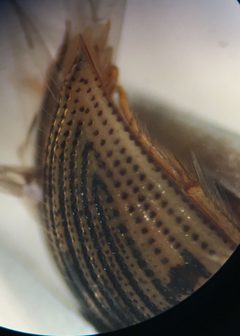
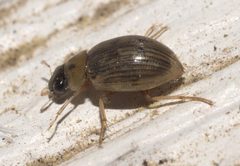
Berosus aculeatus is a of hydrophilid first described by John Lawrence LeConte in 1855. It is native to the eastern United States and Cuba, with records spanning from Florida to New England and west to Iowa and Wisconsin. The species is distinguished by its prolonged elytral apices—a diagnostic morphological feature. Like other members of the Berosus, it is associated with aquatic or semi-aquatic , though specific ecological details remain poorly documented.

Pronunciation
How to pronounce Berosus aculeatus: /bɛˈroː.sus a.kʊˈleɪ.təs/
These audio files are automatically generated. While they are not always 100% accurate, they are a good starting point.
Identification
The prolonged elytral apices are the key diagnostic feature separating Berosus aculeatus from similar in the . In the eastern United States, it may occur sympatrically with other Berosus species; examination of elytral apex structure is necessary for confident identification. No comprehensive modern key to North American Berosus species was found in available sources.
Images
Habitat
Aquatic or semi-aquatic environments typical for Hydrophilidae; specific microhabitat preferences not documented. Members of Berosus are generally found in standing or slow-moving freshwater .
Distribution
Eastern United States (Florida, Georgia, South Carolina, North Carolina, Mississippi, Iowa, Indiana, Massachusetts, Maine, Michigan, New Hampshire, New York, Vermont, Wisconsin) and Cuba. The Cuban record represents a disjunct or possible human-mediated introduction.
Seasonality
activity period not documented in available sources.
Life Cycle
Larval development and details not documented. Presumed to have typical hydrophilid with aquatic or semi-aquatic larval stages, but this is inferred from -level traits rather than -specific observation.
Behavior
No -specific behavioral observations documented. Like other hydrophilid beetles, likely capable of swimming and diving, with possibly attracted to lights.
Ecological Role
Presumed or scavenger in aquatic based on -level ; specific role unstudied.
Human Relevance
No documented economic importance, pest status, or conservation concern. The has been recorded infrequently and is not the subject of targeted study.
Similar Taxa
- Other Berosus species share general body form and ; distinguished primarily by elytral apex shape and other subtle morphological differences requiring detailed examination.
More Details
Nomenclatural note
Catalogue of Life lists Berosus aculeatus as an 'ambiguous synonym,' while GBIF treats it as accepted. This discrepancy reflects ongoing taxonomic uncertainty or potential confusion with similar in historical literature.
Data limitations
Despite being described in 1855, the remains poorly known ecologically. Only 5 observations recorded in iNaturalist as of source date, indicating it is either genuinely rare, undercollected, or difficult to identify without specialized examination.
Sources and further reading
- BugGuide
- Wikipedia
- GBIF taxonomy match
- iNaturalist taxon
- Catalogue of Life
- A Brazilian longhorned beetle – Oxymerus aculeatus | Beetles In The Bush
- Mallow munchers: Mallow sawfly, a.k.a. Hibiscus sawfly, Atomacera decepta — Bug of the Week
- Archives | Beetles In The Bush
- Bibliography | Beetles In The Bush
- Mallow munchers: Mallow sawfly, Atomacera decepta — Bug of the Week
- From the Bug of the Week Mailbag: Daddy-longlegs, the most venomous of all spiders? Opilionids and Pholcid spiders — Bug of the Week