Helobata
Bergroth, 1888
Species Guides
1- Helobata larvalis(Pickerelweed Water Beetle)
Helobata is a of water scavenger beetles ( Hydrophilidae) established by Bergroth in 1888. It comprises 13 described , primarily distributed in the Neotropical region with one species, H. larvalis, extending into North America. These medium-sized beetles inhabit open aquatic environments with abundant vegetation. The genus was comprehensively diagnosed by Girón and Short.
Pronunciation
How to pronounce Helobata: /ˌhɛloʊˈbɑːtə/
These audio files are automatically generated. While they are not always 100% accurate, they are a good starting point.
Identification
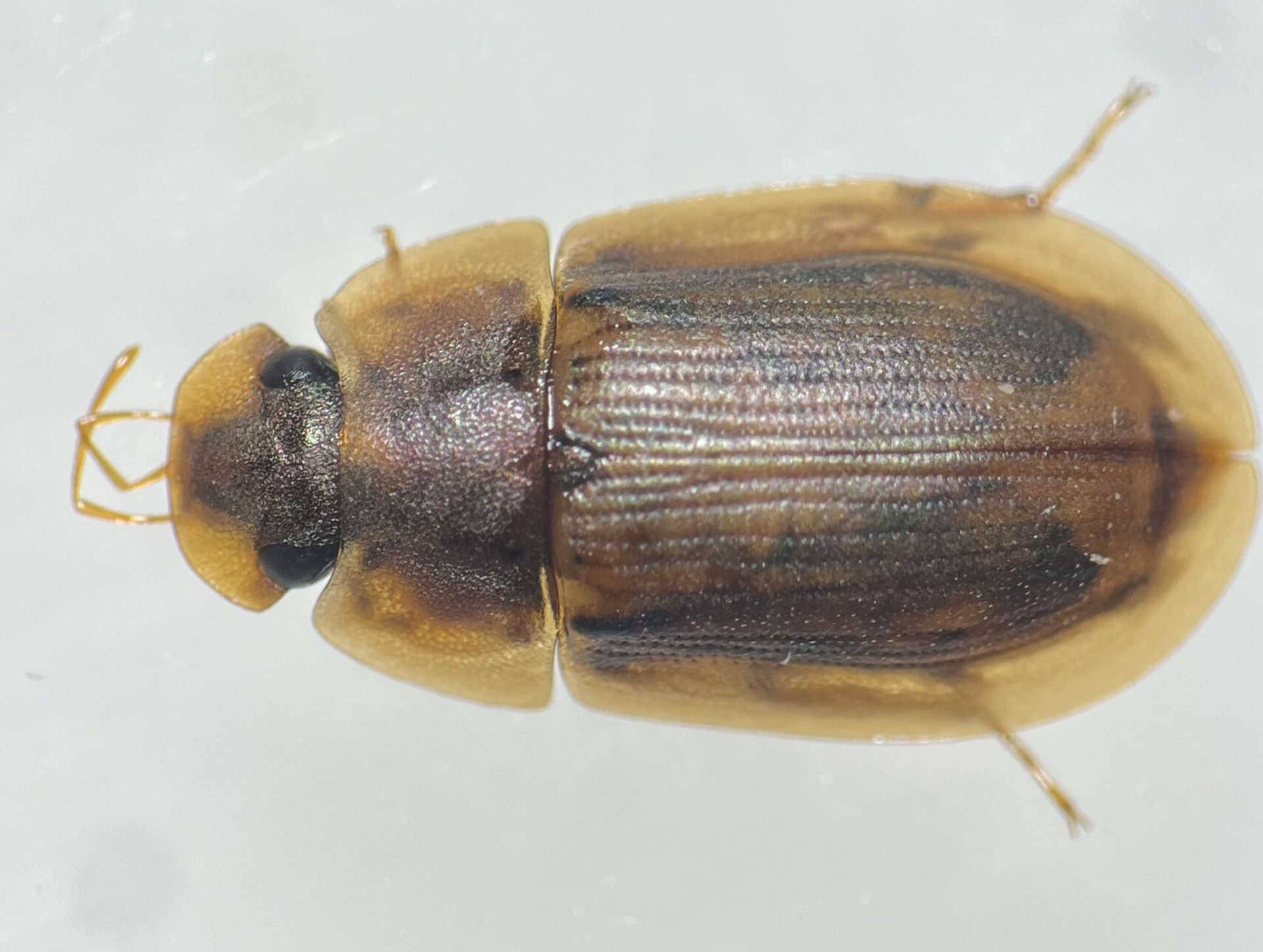
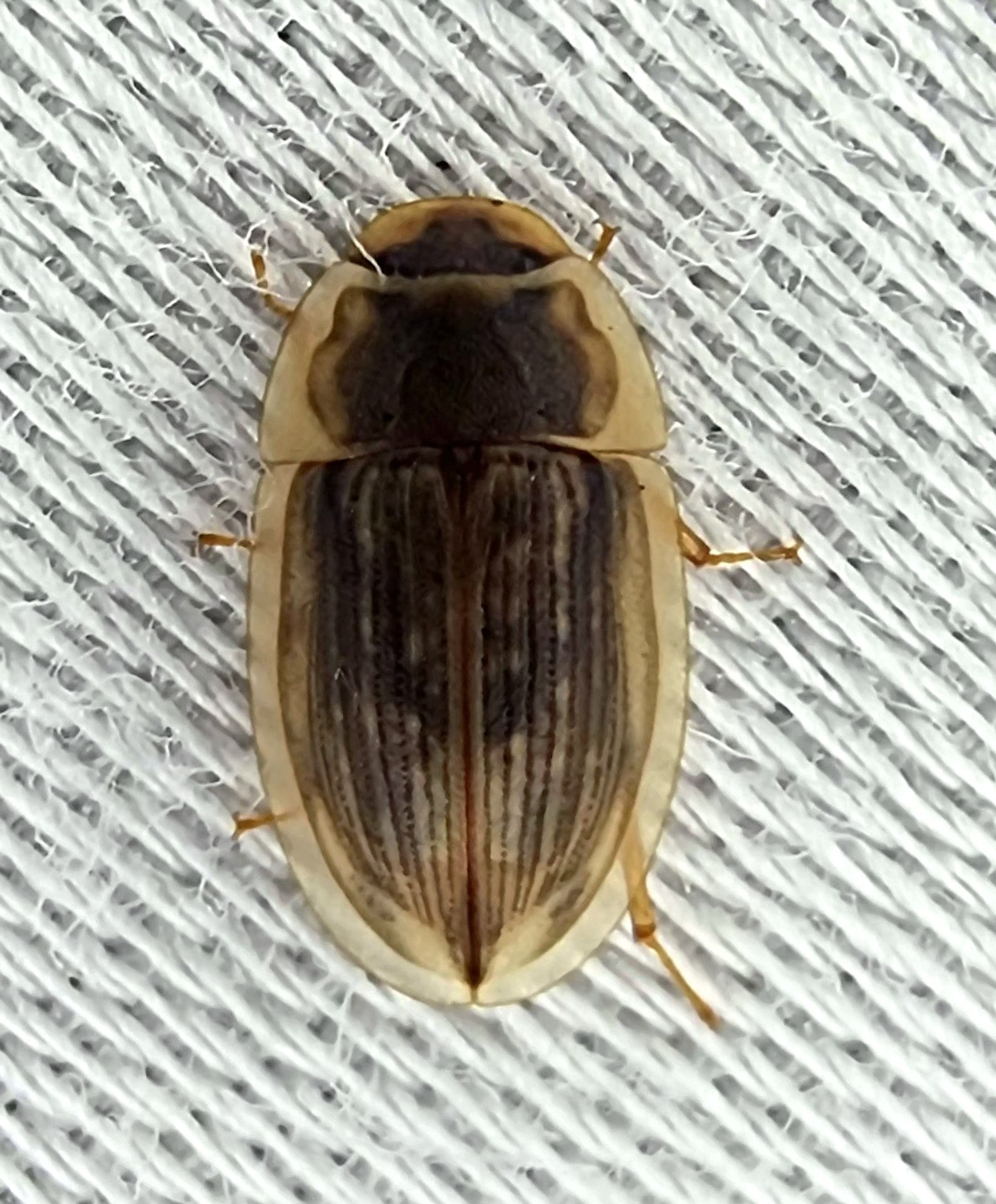
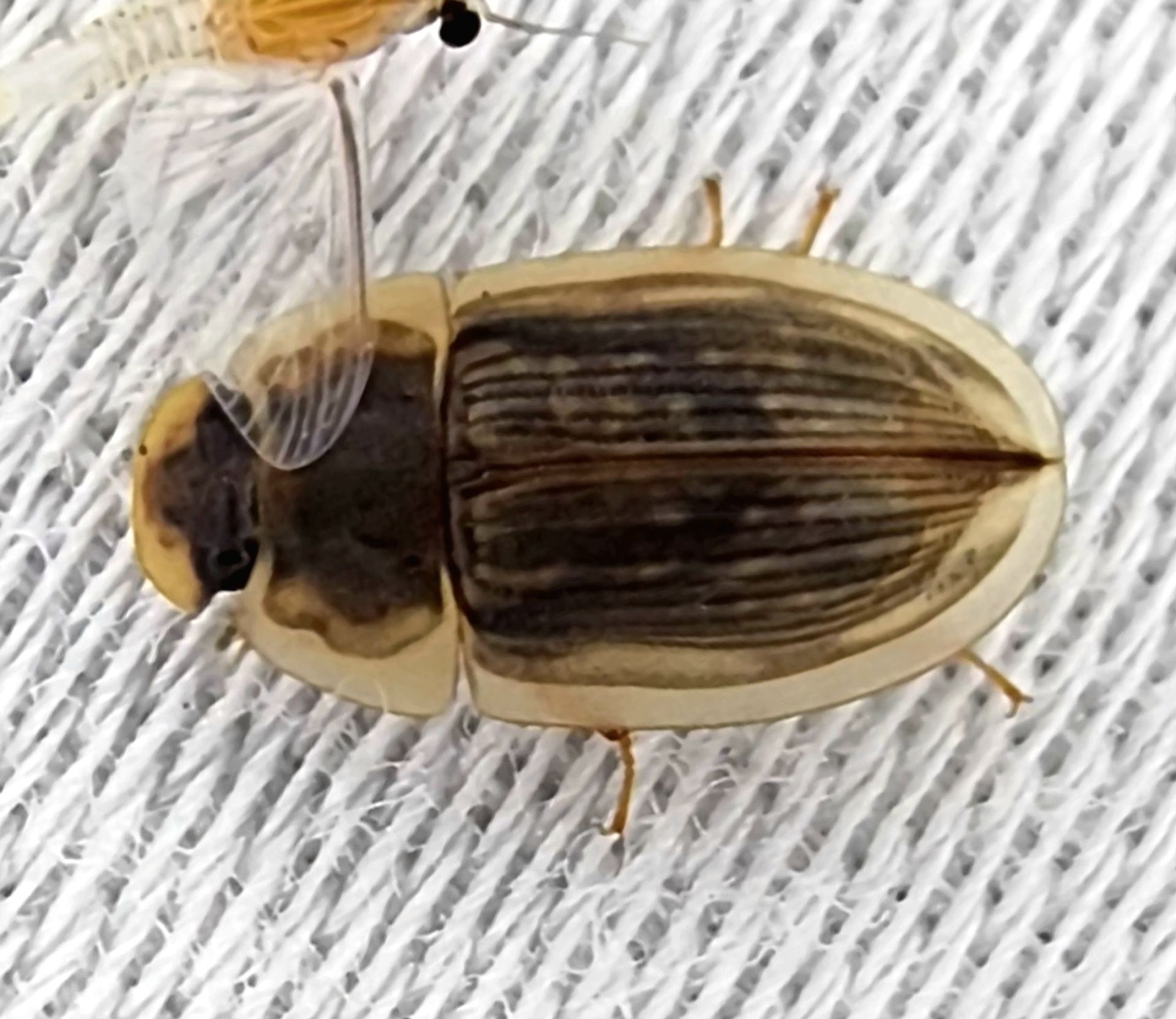
Distinguished from other hydrophilid by the combination of: flattened and broadly explanate pronotum and ; long maxillary palps; granulose body surface with mottled patterning; and small to medium size (4–7 mm). A complete diagnostic treatment is provided by Girón and Short. Within the genus, identification requires examination of detailed morphological characters addressed in species-level keys.
Images
Appearance
Medium-sized beetles measuring 4–7 mm in length. Coloration ranges from yellowish-brown to dark brown. The body surface is granulose and typically exhibits a mottled or patterned appearance. The pronotum and are flattened and broadly explanate (laterally expanded). The maxillary palps are notably long.
Habitat
Primarily occurs in open with abundant vegetation. Aquatic or semi-aquatic environments typical of water scavenger beetles.
Distribution
Predominantly Neotropical. Distributed across South America including Brazil (Amazonas, Roraima, Mato Grosso, Mato Grosso do Sul, Minas Gerais, Pará, Rio de Janeiro, Ceará, Goiás), Argentina, Paraguay, Venezuela, Suriname, Bolivia, and additionally recorded in Central America (Guatemala, Cuba, Mexico) and North America (USA: California, Florida, Louisiana, Mississippi, North Carolina, South Carolina, Texas, Virginia). The North American distribution is attributable to H. larvalis. Colombian records exist from Arauca and Santander departments.
Similar Taxa
- Other Acidocerinae generaHelobata is distinguished within Acidocerinae by its flattened, explanate body form and long maxillary palps; other in the typically lack this combination of traits
More Details
Taxonomic history
The was established by Ernst Evald Bergroth in 1888. A comprehensive and revision were provided by Girón and Short.
Species diversity
Contains 13 described . H. larvalis is the most broadly distributed species, being the only member of the to reach North America.