
Hypocaccus brasiliensis
(Paykull, 1811)
clown beetle
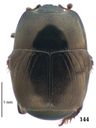
Hypocaccus brasiliensis is a of clown beetle in the Histeridae, originally described by Paykull in 1811 as Hister brasiliensis. It is a widely distributed species with records spanning multiple continents including Africa, Europe, Asia, the Americas, and Oceania. The species belongs to a of small histerid beetles commonly associated with decaying organic matter and carrion.
Pronunciation
How to pronounce Hypocaccus brasiliensis: /ˌhɪpoʊˈkækəs ˌbræzɪliˈɛnsɪs/
These audio files are automatically generated. While they are not always 100% accurate, they are a good starting point.
Identification
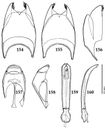
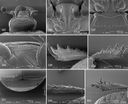
Identification to level within Hypocaccus requires examination of fine morphological characters including antennal club structure, prosternal process shape, mesosternal structure, and male genitalia. The species can be distinguished from by subtle differences in these sclerotized structures, though specific diagnostic characters for H. brasiliensis are not detailed in readily available literature. Specimens from different geographic regions may show variation in size and coloration.
Images
Appearance
As a member of Histeridae, this exhibits the characteristic compact, oval to elongate body form typical of clown beetles. Histerids generally have shortened that expose one or more abdominal tergites, clubbed with segments, and metallic coloration ranging from black to bronze or green. Specific morphological details for H. brasiliensis are not well documented in available sources.
Habitat
Histerid beetles are typically found in rich in decaying organic matter. Based on -level , H. brasiliensis likely inhabits environments such as carrion, , decaying vegetation, and other decomposing substrates. The has been recorded from diverse localities including islands (Azores, Madeira, Canary Islands, Mascarenes, Seychelles, Society Islands, New Caledonia), suggesting adaptability to various terrestrial habitats from lowland to montane regions.
Distribution
The has a broad intercontinental distribution spanning the Palearctic (Europe, Turkey, northern Africa, Afghanistan, Kazakhstan, Tajikistan), Afrotropical (South Africa, Madagascar, Mascarenes, Seychelles), Oriental (China, southern Asia), Nearctic (Mexico), Neotropical (Central and South America to Chile), and Oceanian (New Caledonia, Society Islands, Australia) regions. It is also recorded from several Atlantic islands including the Azores, Madeira, and Canary Islands.
Ecological Role
As a member of Histeridae, this likely functions as a or scavenger in decomposition . Histerid beetles are known to feed on the larvae of flies and other insects associated with carrion and decaying matter, potentially playing a role in regulating of necrophagous insects and contributing to nutrient cycling.
Similar Taxa
- Hypocaccus spp.Other in the Hypocaccus share similar general and ecological preferences; precise identification requires examination of male genitalia and other fine structural characters.
- Other HisteridaeMembers of related within Histeridae (e.g., Hister, Saprinus, Margarinotus) share the characteristic compact body form, shortened , and clubbed ; differentiation relies on details of antennal structure, prosternal and mesosternal , and elytral striation patterns.
More Details
Taxonomic history
Originally described as Hister brasiliensis by Paykull in 1811, this was later transferred to the Hypocaccus. The genus Hypocaccus contains numerous small histerid species, many of which are difficult to distinguish without detailed examination.
Biogeographic notes
The exceptionally wide distribution of H. brasiliensis, spanning multiple continents and oceanic islands, is notable. This pattern may reflect human-mediated , natural dispersal capabilities, or potentially cryptic requiring further taxonomic investigation.
Sources and further reading
- BugGuide
- Wikipedia
- GBIF taxonomy match
- iNaturalist taxon
- NCBI Taxonomy
- Encyrtid Holdings | Entomology Research Museum
- Welcome Wasps: Parasitoids Show Promise for Management of Invasive Fruit Fly
- Thripidae | Beetles In The Bush
- The State of IPM for Spotted-Wing Drosophila
- Cyber catalogue and revision of the nematode genus Enchodelus