
Omalodes
Dejean, 1833
clown beetles
Species Guides
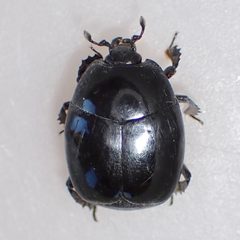
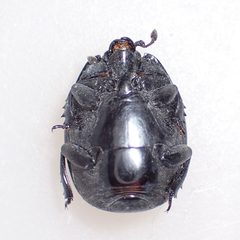
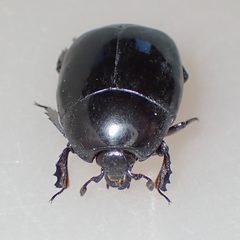
1- Omalodes grossus(clown beetle)
Omalodes is a of clown beetles in the Histeridae, comprising approximately 63-68 described distributed across three subgenera. It represents the largest genus within the tribe Omalodini and has an exclusively Neotropical distribution, with some species extending into the southern United States. One species, Omalodes (Omalodes) fassli, has been reported on banana crops in Colombia where it may play a role in controlling the banana weevil. The genus is characterized by morphological features including complete on the in some subgenera.
Pronunciation
How to pronounce Omalodes: //ˈoʊməloʊdiːz//
These audio files are automatically generated. While they are not always 100% accurate, they are a good starting point.
Identification
Members of Omalodes can be distinguished from other in Omalodini using the tribe-level identification key provided in taxonomic revisions. Within the genus, -level identification relies on specific morphological characters: presence or absence of complete on the ; development of lateral pronotal punctures; presence of superficial or impression on the ; punctation pattern on the propygidium; presence of setae on outer submarginal region of tibiae; and presence of glandular openings posterad to metacoxae. The subgenus Omalodes is characterized by complete apical stria on the elytra.
Images
Habitat
Agricultural: banana crops (Musa paradisiaca) have been documented as for at least one (O. fassli) in Colombia.
Distribution
Exclusively Neotropical, with distribution across Latin America from the southern United States through Central America, the Caribbean, and South America. Documented from Chile (Atacaman biogeographic province), Colombia, Dominican Republic (Monte Cristi Province), and throughout the broader Neotropical region.
Host Associations
- Musa paradisiaca - /crop associationbanana/plátano crops; first reported for O. fassli in Colombia
- Cosmopolites sordidus - potential prey/biocontrol targetbanana weevil; potential role as biocontroller inferred but not directly observed
Behavior
One (O. fassli) has been reported with potential role as biocontroller of the banana weevil (Cosmopolites sordidus), though this represents inferred rather than directly observed .
Ecological Role
Potential agent for agricultural pests, specifically the banana weevil in banana cropping systems.
Human Relevance
Agricultural significance: O. fassli has been identified as a potential natural enemy of the banana weevil (Cosmopolites sordidus), a key pest of banana crops worldwide.
Similar Taxa
More Details
Taxonomic history
The tribe Omalodini was redefined in 2015 to comprise only the lineage of Ebonius and Omalodes, restricting it from previous broader circumscriptions. The contains three subgenera, with the nominate subgenus Omalodes characterized by complete on the .
Species diversity
With approximately 63-68 described , Omalodes represents the largest in Omalodini. New species continue to be described, including recent additions from the Dominican Republic and Chile.
Sources and further reading
- BugGuide
- Wikipedia
- GBIF taxonomy match
- iNaturalist taxon
- NCBI Taxonomy
- Catalogue of Life
- Rediscovery of Omalodes (Omalodes) fassli Bickhardt, 1911 (Coleoptera: Histeridae) in Colombia and first report of the species on banana crops (Musa paradisiaca)
- Two new species of Omalodes from Dominican Republic (Coleoptera: Histeridae)
- New species of Omalodes and redefinition of the tribe Omalodini (Coleoptera: Histeridae: Histerinae)