
Hololeptini
Hope, 1840
clown beetles
Genus Guides
2Hololeptini is a tribe of clown beetles ( Histeridae) comprising approximately 6 and more than 130 described . Members are characterized by their compact, often flattened body form and association with decomposing organic matter. The tribe includes the genus Hololepta, which contains some of the largest histerid beetles. Hololeptini was established by Hope in 1840.


Pronunciation
How to pronounce Hololeptini: //hɒloʊˈlɛptɪnaɪ//
These audio files are automatically generated. While they are not always 100% accurate, they are a good starting point.
Identification
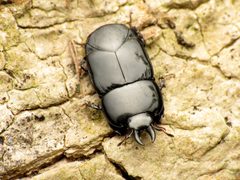
Hololeptini can be distinguished from other histerid tribes by their distinctly flattened body profile and relatively large size compared to many other histerids. The are typically abbreviated, exposing one or more abdominal tergites. possess a distinct three-segmented club. Members of Hololepta, the type , are notably large and strongly flattened, often exceeding 10 mm in length.
Images
Habitat
in this tribe are primarily associated with decaying organic matter, including rotting wood, compost, and carrion. Many species inhabit forest floor environments where decomposing plant and animal material accumulates.
Distribution
Hololeptini has a worldwide distribution with representatives on multiple continents. Individual show varying geographic ranges; Hololepta occurs primarily in the Holarctic region, while Oxysternus and related genera extend into tropical regions.
Diet
Larvae and are predatory, feeding on the larvae of other insects inhabiting decomposing substrates. Specific prey records include fly larvae (Diptera) and other soft-bodied found in rotting organic matter.
Life Cycle
Development occurs within decomposing organic substrates. Larvae are campodeiform (elongate and active) and predatory. takes place in the substrate. The duration of life stages varies with temperature and substrate quality.
Behavior
are rapid runners and often conceal themselves beneath decomposing material when disturbed. They are attracted to carrion and other strong odor sources. Some have been observed aggregating at suitable breeding sites.
Ecological Role
Hololeptini function as in decomposition , regulating of other saprophagous insects. They contribute to nutrient cycling by consuming larvae that would otherwise compete for decaying resources.
Human Relevance
Some are used as forensic indicators due to their predictable of carrion. They may occasionally be found in composting facilities and organic waste processing operations.
Similar Taxa
- HisteriniAnother tribe in Histerinae; Histerini generally have more convex body profiles and shorter elytral truncation compared to the distinctly flattened Hololeptini.
- PlatysomatiniShares flattened body form but differs in antennal club structure and typically has more extensive elytral coverage of the .
More Details
Taxonomic History
The authorship of Hololeptini has been attributed to Hope (1840) in modern databases, though some older literature may cite alternative dates. The tribe's composition has remained relatively stable, with six currently recognized : Dimalus, Eutidium, Hololepta, Iliotona, Oxysternus, and Petalosoma.
Size Variation
Hololepta represent some of the largest members of Histeridae, with some individuals reaching 15 mm or more, while other in the tribe such as Dimalus are considerably smaller.