
Haeteriinae
Marseul, 1857
Genus Guides
8- Aritaerius
- Haeterius(clown beetles)
- Hippeutister(clown beetles)
- Pinaxister(clown beetles)
- Renclasea(clown beetles)
- Reninus
- Terapus
- Ulkeus(clown beetles)
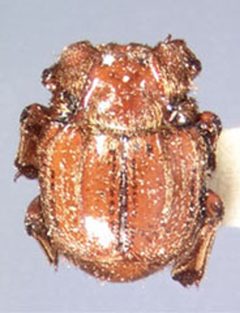
Haeteriinae is a of clown beetles (Histeridae) comprising over 110 and 330 described . Members are obligate myrmecophiles and , specialized as social that infiltrate and colonies. The subfamily exhibits dramatic behavioral and chemical adaptations for colony integration, including mouth-to-mouth feeding with , , and chemical mimicry of host scents. A 99-million-year-old fossil from Burmese amber demonstrates that this symbiotic relationship originated in the Cretaceous period, contemporaneous with the earliest-known ants.
Pronunciation
How to pronounce Haeteriinae: /haɪtəˈraɪni/
These audio files are automatically generated. While they are not always 100% accurate, they are a good starting point.
Images
Habitat
and colonies; specialized as obligate nest intruders of social insect colonies. Modern predominantly associated with Neotropical army ants (Ecitonini), particularly Eciton species. Some specimens collected by intercept traps suggest flights occur outside colonies.
Distribution
Global distribution as nest associates; modern diversity concentrated in Neotropical region. Fossil record includes 99-million-year-old Burmese amber from northern Myanmar (Cretaceous), indicating ancient origin and widespread historical distribution.
Host Associations
- Ants (Formicidae) - obligate myrmecophile; specialized nest intruder with confirmed including mouth-to-mouth feeding, , and chemical mimicryConfirmed : Eciton burchelli, Eciton hamatum, Eciton mexicanum; earliest known association with stem-group Cretaceous ants
- Termites - obligate characterized as obligate myrmeco- and termitophilous, though specific records less documented than associations
Behavior
Mouth-to-mouth feeding with ants; of worker ants; chemical mimicry of scents to avoid detection and aggression. Release of chemical signals from glands near leg bases to deceive or pacify host ants. Some exhibit specialized phoretic transport: Nymphister kronaueri uses elongated as gripping pliers to attach between the petiole and postpetiole of medium-sized Eciton mexicanum workers, hitchhiking during colony emigrations. Morphological adaptations include thick spiked legs and well-protected and to withstand handling by ant mandibles.
Ecological Role
Social within and colonies; potentially represents the oldest known behavioral in Metazoa based on social interactions between organisms. Pervasive switching throughout evolutionary history inferred from fossil record and modern diversity.
Sources and further reading
- BugGuide
- Wikipedia
- iNaturalist taxon
- NCBI Taxonomy
- Catalogue of Life
- Figure 4. Diversity of modern Haeteriinae associated with Neotropical army ants (Ecitonini).
- Description of three new species of Nymphistrini (Coleoptera: Histeridae: Haeteriinae) from Central America
- Figure 3. Antiquity of Promymister implies pervasive host switching of Haeteriinae from Cretaceous to Recent.
- Nymphister kronaueri von Beeren & Tishechkin sp. nov., an army ant-associated beetle species (Coleoptera: Histeridae: Haeteriinae) with an exceptional mechanism of phoresy