
Haeterius
Dejean, 1833
clown beetles
Species Guides
8- Haeterius blanchardi(clown beetle)
- Haeterius brunneipennis
- Haeterius californicus(clown beetle)
- Haeterius exiguus(clown beetle)
- Haeterius morsus(clown beetle)
- Haeterius tristriatus(clown beetle)
- Haeterius wagneri(clown beetle)
- Haeterius zelus
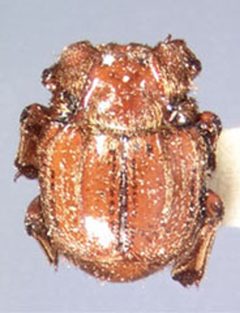
Haeterius is a of clown beetles ( Histeridae) comprising at least 20 described . These beetles belong to the Haeteriinae and are characterized by their compact body form typical of histerid beetles. The genus was established by Dejean in 1833 and contains species distributed across multiple continents. Individual species vary in size and coloration, with some exhibiting notably hairy or setose bodies.
Pronunciation
How to pronounce Haeterius: /hɛˈtɛɹ.i.əs/
These audio files are automatically generated. While they are not always 100% accurate, they are a good starting point.
Identification
Members of Haeterius can be distinguished from other Histeridae by their placement in the tribe Haeteriini, though specific diagnostic characters require examination of detailed morphological features such as antennal club structure, prosternal process shape, and elytral striation patterns. Many in this genus possess conspicuous setae or on the body surface, which contrasts with the smoother of related genera. Species-level identification typically requires reference to original descriptions and comparison of due to subtle morphological differences between closely related .
Images
Distribution
of Haeterius have been recorded from North America (including the United States and Canada), Europe (Denmark, Sweden), and other regions based on described species authorships. The appears to have a transcontinental distribution with particular concentration of described species in North America.
Similar Taxa
- Other Histeridae generaHaeterius belongs to the distinctive Haeteriinae, which separates it from the majority of Histeridae in subfamily Histerinae; Haeteriinae members often exhibit more pronounced body setation and modified antennal clubs compared to Histerinae.
- Genus EuspilotusEuspilotus is another in tribe Haeteriini and shares placement with Haeterius; separation requires detailed examination of genitalic and external skeletal characters.
More Details
Taxonomic History
The was established by Pierre François Marie Auguste Dejean in 1833. Many North American were described by prominent 19th and early 20th century coleopterists including John Lawrence LeConte, George Henry Horn, and Henry Clinton Fall.
Species Diversity
At least 26 have been described in Haeterius, with the majority of species descriptions originating from North American material. The contains both relatively widespread species (e.g., Haeterius ferrugineus, originally described from Europe) and narrowly forms.