
Platylomalus aequalis
(Say, 1825)
clown beetle
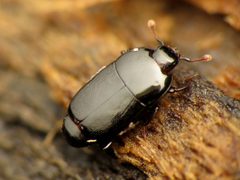
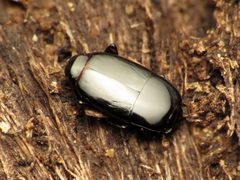
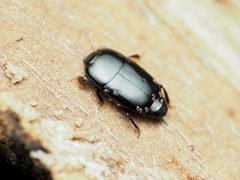
Platylomalus aequalis is a of clown beetle in the Histeridae, originally described by Thomas Say in 1825 as Hister aequalis. This small is widely distributed across North America, ranging from eastern Canada to the Rocky Mountains and south to Florida. As a member of the histerid beetles, it is associated with decomposing organic matter and carrion .
Pronunciation
How to pronounce Platylomalus aequalis: //ˌplætɪˈloʊmələs iːˈkwɑːlɪs//
These audio files are automatically generated. While they are not always 100% accurate, they are a good starting point.
Identification
Platylomalus aequalis can be distinguished from other Platylomalus by its relatively uniform, unpatterned . The species name "aequalis" (Latin for "equal" or "uniform") refers to this even coloration. Members of the Platylomalus are characterized by their flattened body form and relatively long legs compared to other histerids. Accurate identification requires examination of genitalic characters and comparison with .
Images
Distribution
Canada (Alberta, British Columbia, Manitoba, Ontario, Quebec, Saskatchewan) and United States (eastern states to Florida, Rocky Mountain region, Oregon). GBIF records indicate broad transcontinental distribution across temperate North America.
Ecological Role
As a member of the Histeridae, Platylomalus aequalis likely functions as a or scavenger in decomposing organic matter . Histerid beetles are generally associated with carrion, , and decaying vegetation where they prey on fly larvae and other insects.
Similar Taxa
- Platylomalus biplagiatusSimilar flattened body form but distinguished by presence of two distinct elytral markings or fasciae
- Platylomalus parallelicollisSimilar size and general habitus but differs in pronotal and elytral proportions
More Details
Taxonomic history
Originally described by Thomas Say in 1825 under the Hister, later transferred to Platylomalus. The genus Platylomalus was established to accommodate flattened histerid with distinctive leg proportions.
Collection records
Specimens have been documented in entomological collections across North America, with 112 iNaturalist observations as of the knowledge cutoff date.