
Caenia
Newman, 1838
Species Guides
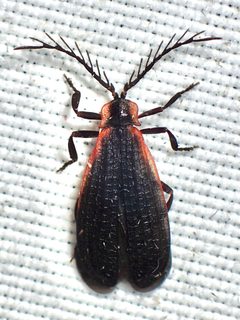
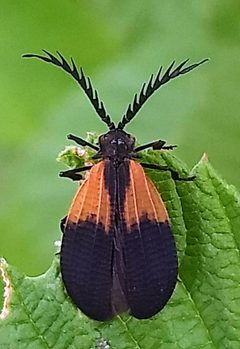
3- Caenia amplicornis
- Caenia dimidiata(Terminal Net-winged Beetle)
- Caenia possibly-new
Caenia is a of net-winged beetles in the Lycidae, established by Newman in 1838. The genus contains at least three described , including Caenia amplicornis and Caenia dimidiata. Members of this genus share the characteristic reticulated wing venation that defines the family Lycidae. The genus is part of a diverse group of beetles known for their aposematic coloration and soft, flexible .
Pronunciation
How to pronounce Caenia: /ˈkaɪ.ni.ə/
These audio files are automatically generated. While they are not always 100% accurate, they are a good starting point.
Identification
Caenia can be distinguished from other Lycidae by specific combinations of antennal and pronotal features, though precise diagnostic characters require examination of . The genus is placed within Lycidae based on the diagnostic reticulate wing venation with dense cross- creating a net-like pattern. Species-level identification relies on differences in antennal structure, body proportions, and coloration patterns, with C. amplicornis notably having expanded antennal segments.
Images
Distribution
Records indicate presence in Colombia and the eastern United States, specifically Vermont. The likely has a broader distribution in the Neotropical and Nearctic regions, but confirmed records are limited.
Similar Taxa
- CalopteronAnother in Lycidae with similar net-veined wings; Caenia differs in antennal structure and body form
- LycusShares characteristics but Caenia generally have different pronotal shapes and antennal proportions
More Details
Taxonomic note
The name Caenia has been used in multiple taxonomic groups. Robineau-Desvoidy (1830) used Caenia for a genus of Diptera (Ephydridae), which is now considered a synonym of Coenia. The genus Caenia Newman, 1838 is valid and distinct. Care must be taken to distinguish these homonymous usages in literature searches.
Species inventory
Only three are formally described: Caenia amplicornis LeConte, 1881; Caenia dimidiata (Fabricius, 1801); and an undescribed species referenced as 'sp-nova'. The actual may be underestimated given limited taxonomic study.