
Lycus
Fabricius, 1787
Netwing Beetles
Species Guides
1- Lycus arizonensis(Arizona Net-winged Beetle)
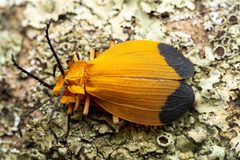
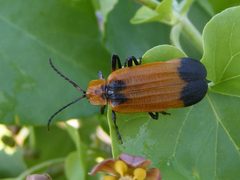
Lycus is a of net-winged beetles in the Lycidae, characterized by soft, flexible with a distinctive reticulate (net-like) venation pattern. These beetles are notable for their aposematic coloration, typically featuring bold black and orange or red patterns that advertise their chemical defenses to . The genus is widely distributed and includes that frequent flowers, where feed on pollen and nectar.

Pronunciation
How to pronounce Lycus: /ˈlaɪkəs/
These audio files are automatically generated. While they are not always 100% accurate, they are a good starting point.
Identification
Distinguished from other lycid by the combination of reticulate elytral venation forming a net-like pattern, soft and flexible that do not fully cover the , and often striking black-and-orange or black-and-red aposematic coloration. The pronotum is typically expanded laterally and may bear distinctive projections. Similar to Calopteron but differs in specific venation patterns and antennal structure.
Images
Habitat
Found in diverse terrestrial including forests, woodlands, and scrublands; frequently observed on flowers, particularly goldenrods (Solidago spp.) and other Asteraceae.
Distribution
Widely distributed across North America, with ranging from the southwestern United States through Mexico; also present in other regions globally. Specific species such as Lycus loripes documented in Arizona and Texas.
Seasonality
activity primarily during summer months; observations from July in Texas and Arizona indicate peak activity in mid to late summer.
Diet
feed on pollen and nectar; larvae are predatory or feed on decaying wood and fungal in rotting logs.
Life Cycle
Complete with , larval, pupal, and stages; larvae develop in decaying wood or under bark.
Behavior
are and frequently found on flowers; slow, deliberate pattern. When disturbed, may reflex-bleed from leg joints, releasing defensive compounds. Known to aggregate on flowers.
Ecological Role
serve as while feeding on flowers; larvae contribute to decomposition of dead wood. The is part of a Müllerian mimicry complex with other chemically defended insects, including such as Lycomorpha pholus.
Human Relevance
Occasionally encountered by entomologists and naturalists; no significant economic impact. Some are collected for scientific study. The bright coloration makes them conspicuous and subject of interest for nature photography.
Similar Taxa
- CalopteronSimilar net-winged beetles with reticulate ; distinguished by differences in antennal structure and specific venation patterns
- Lycomorpha pholusA that mimics Lycus in coloration and pattern as part of a Müllerian mimicry complex; distinguished by wing structure and