Eropterus trilineatus
(Melsheimer, 1846)
Eropterus trilineatus is a of net-winged beetle in the Lycidae, first described by Melsheimer in 1846. The species is characterized by three longitudinal stripes on the , as indicated by its specific epithet. It is one of several species in the Eropterus found in eastern North America. Net-winged beetles in this family are known for their soft, flexible elytra with distinctive net-like venation patterns.
Pronunciation
How to pronounce Eropterus trilineatus: /ɛ.ˈrɒp.tə.rəs ˌtraɪ.lɪˈniː.ə.təs/
These audio files are automatically generated. While they are not always 100% accurate, they are a good starting point.
Identification
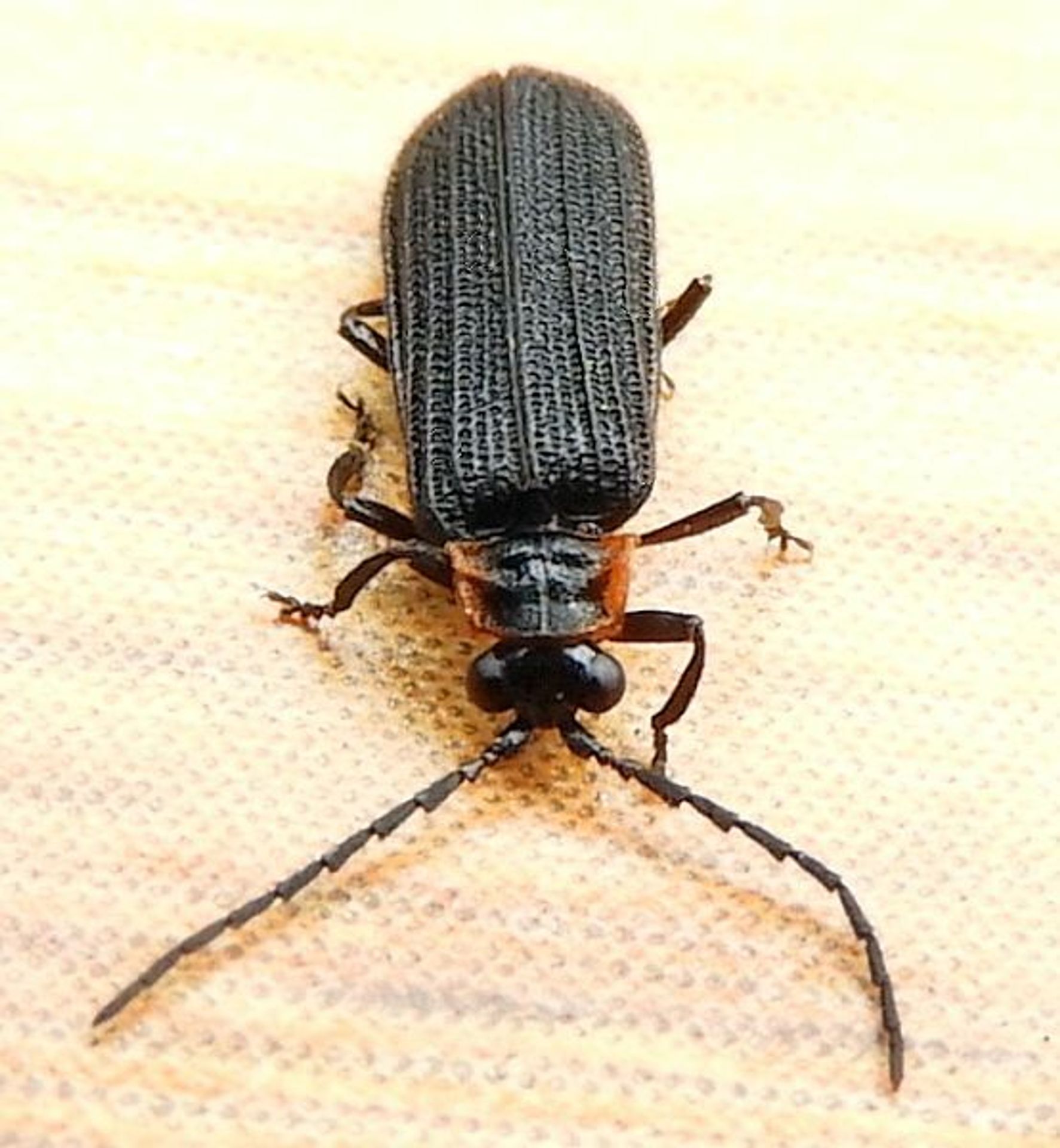
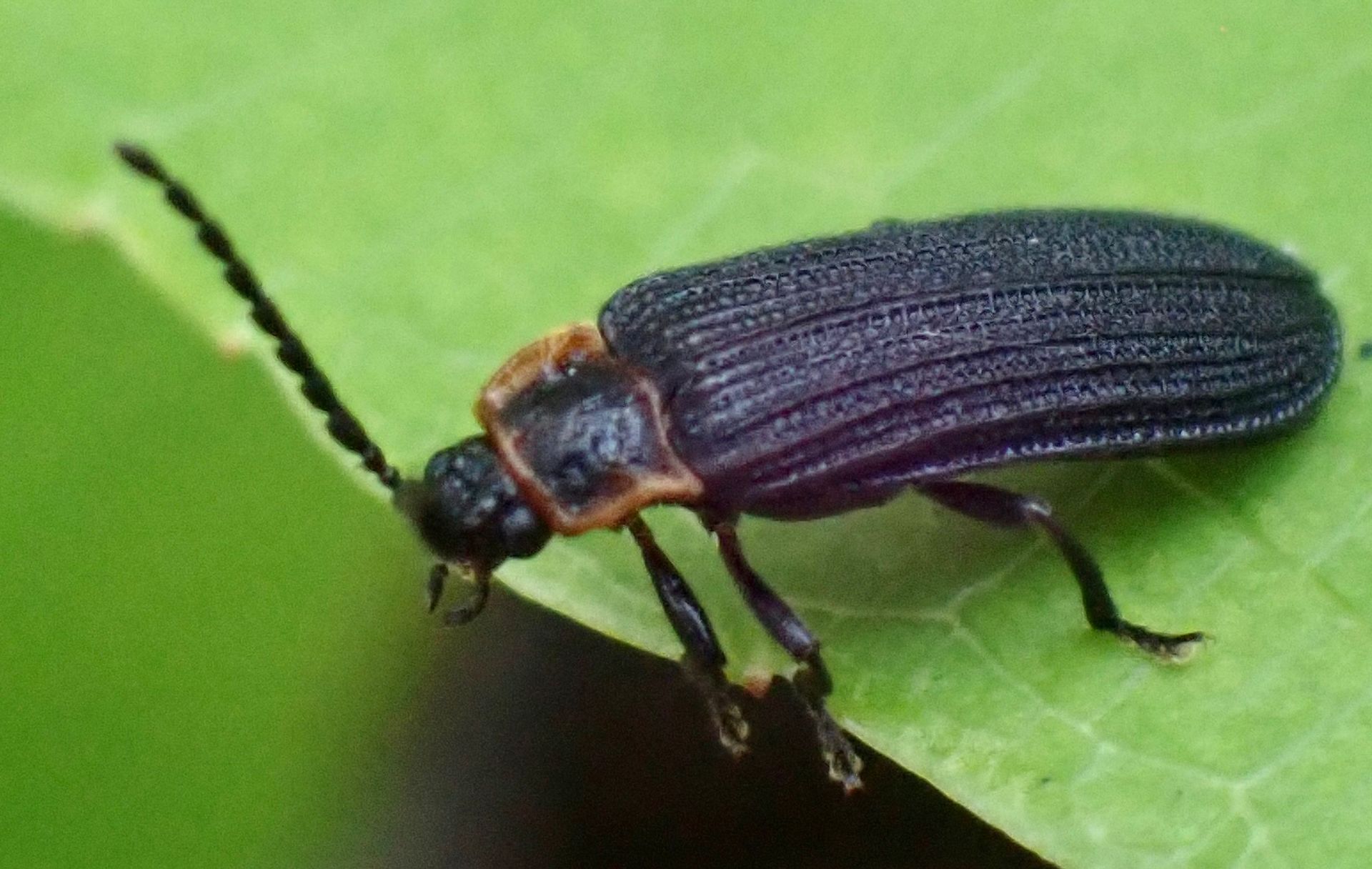
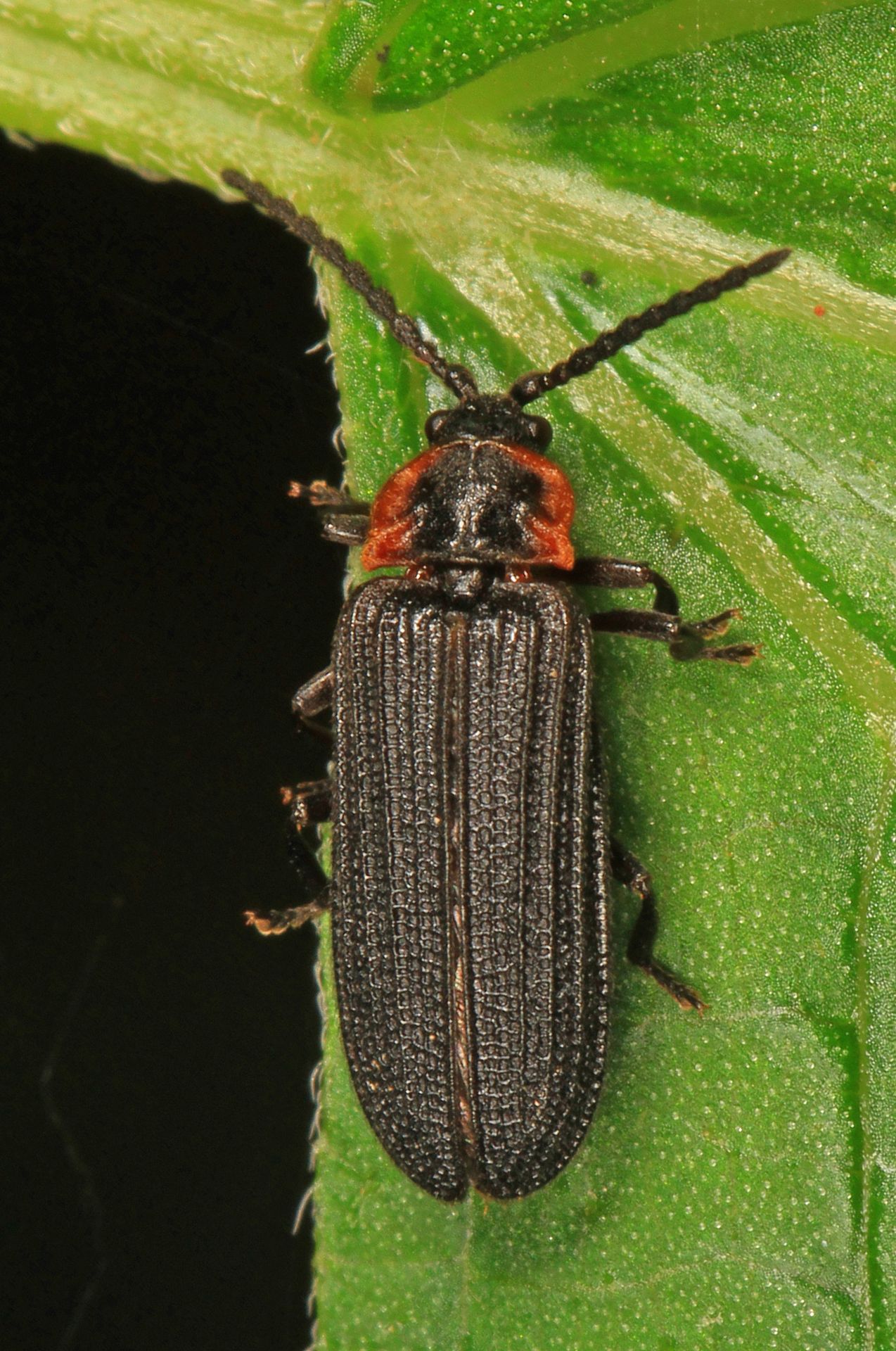
The three prominent longitudinal stripes on the distinguish E. trilineatus from . The net-veined elytra separate Lycidae from other . Within Eropterus, E. trilineatus may be confused with E. scutellaris, but the distinct trilineate pattern and geographic distribution help differentiate them. The soft, flexible elytra that do not meet in a straight line down the midline are diagnostic for the family.
Images
Appearance
have soft, flexible with a characteristic reticulate (net-like) venation pattern typical of Lycidae. The name 'trilineatus' refers to three longitudinal stripes present on the elytra. Body form is elongate and somewhat flattened. Coloration includes orange and black patterning, with the three dark stripes contrasting against lighter background coloration. are serrate or pectinate.
Habitat
Deciduous and mixed forests, particularly in areas with rotting wood and leaf litter. Associated with moist woodland environments where larval development occurs in decaying wood.
Distribution
Eastern North America. Documented from Ontario and Québec in Canada, and Vermont in the United States. Range extends broadly across northeastern North America based on collection records.
Seasonality
have been recorded from May through August, with peak activity in June and July. Seasonal timing corresponds with typical activity periods for temperate net-winged beetles.
Behavior
are and slow-moving. When disturbed, they exhibit (death feigning). Adults are frequently found on vegetation and may be observed feeding on nectar or honeydew. The aposematic coloration suggests unpalatability to , a trait common in Lycidae due to defensive compounds sequestered from materials during larval development.
Ecological Role
Larvae contribute to wood decomposition by feeding on decaying wood and associated fungi, facilitating nutrient cycling in forest . may serve as of small flowers and as prey items for birds and other , though their chemical defenses reduce pressure.
Human Relevance
Occasionally encountered by naturalists and photographers due to distinctive appearance. No economic significance; neither pest nor beneficial in agricultural contexts. Serves as an indicator of mature forest with substantial dead wood resources.
Similar Taxa
- Eropterus scutellarisOverlaps in eastern North American range and similar body form, but lacks the three distinct longitudinal elytral stripes; scutellum coloration and pattern also differ.
- Calopteron speciesMembers of related within Lycidae share net-veined and aposematic coloration, but differ in body proportions, antennal structure, and pattern details.
- Plateros speciesAnother lycid with similar soft-bodied appearance, but Plateros generally have different color patterns and antennal .
More Details
Taxonomic Note
The Eropterus was historically treated as a subgenus of Plateros, but current classification recognizes Eropterus as distinct. The specific epithet 'trilineatus' directly describes the three-lined elytral pattern.
Conservation Status
Not formally assessed; likely secure given broad distribution and association with common forest , though dependent on presence of decaying wood which may be reduced in intensively managed forests.