
Phosphaenus hemipterus
(Geoffroy, 1762)
Lesser Black Glow-worm, Short-winged Firefly, Lesser Glow-worm
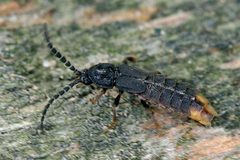
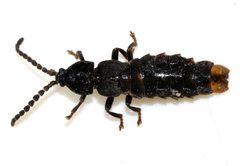
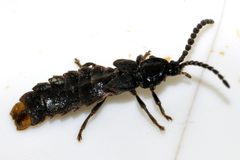
Phosphaenus hemipterus is a firefly in the Lampyridae, commonly known as the lesser black glow-worm or short-winged firefly. Native to Europe and the Mediterranean region, it has been introduced to North America. The species is notable for its reduced wing size in females and its elusive nature, with larvae exhibiting specialized predatory and communication.
Pronunciation
How to pronounce Phosphaenus hemipterus: /fɒsˈfiːnəs hɛmˈɪptərəs/
These audio files are automatically generated. While they are not always 100% accurate, they are a good starting point.
Identification
Distinguished from other central European lampyrid larvae (Lamprohiza splendidula and Lampyris noctiluca) by morphological features detailed in comparative keys. Larvae possess distinct external sense organ arrangements visible under scanning electron microscopy. females are with short wings, unlike the fully winged males.
Images
Appearance
males have fully developed wings; females are with short, reduced wings (hemipterous condition). Larvae have been thoroughly redescribed with detailed scanning electron microscope imagery showing external sense organs.
Habitat
Meadows, floodplains, forest edges, and dry slopes; also occurs in anthropogenic including parks and gardens.
Distribution
Native to the Mediterranean, Central Europe, west to the Atlantic Ocean, and north to the edge of Scandinavia and England. Introduced and established in North America. Present in Europe and Northern Asia (excluding China).
Diet
Larvae are predatory; specific prey items not documented in available sources.
Life Cycle
Development includes , larval, and stages. Specific timing and duration of life stages not documented in available sources.
Behavior
Larvae exhibit predatory and a specific lifestyle adapted to their . communication has been documented. The is described as elusive, with limited observational records despite relatively broad distribution.
Human Relevance
In Britain, considered fairly rare compared to the common glow-worm (Lampyris noctiluca). Subject of scientific interest due to its unique and elusive nature.
Similar Taxa
- Lamprohiza splendidulaOverlapping distribution in Central Europe; distinguished by larval and external sense organ arrangement
- Lampyris noctilucaOverlapping distribution in Central Europe and shared 'glow-worm'; distinguished by larval and more common status in Britain
More Details
Taxonomic Note
Authority sometimes cited as (Fourcroy, 1785) or (Goeze, 1777) in literature; Geoffroy, 1762 is the accepted authorship in major databases.
Research Significance
The mature larva was thoroughly redescribed in 2018 with detailed scanning electron microscope figures, representing significant advancement in understanding this elusive ' .
Sources and further reading
- BugGuide
- GBIF taxonomy match
- iNaturalist taxon
- NCBI Taxonomy
- Catalogue of Life
- Research Confirms First Bed Bug Infestation in Costa Rica in Over 20 Years
- Some "Green" Oils Can Stop a Bed Bug—But Many Can't
- Why Bananas and Sand Will Improve Response to an Invasive Beetle
- Redescription of immature stages of central European fireflies, Part 3: Phosphaenus hemipterus (Goeze, 1777) larva, and notes on its life cycle and behaviour, with a key to three central European lampyrid larvae (Coleoptera: Lampyridae)