
Microphotus chiricahuae
Green, 1959
Chiricahua glow-worm
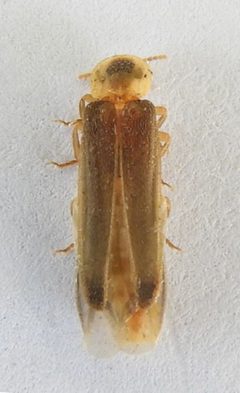
Microphotus chiricahuae is a of glow-worm in the Lampyridae, described by Green in 1959. The species epithet references the Chiricahua Mountains of southeastern Arizona, indicating its geographic association with this region. As a member of the Microphotus, it belongs to a group of beetles known for bioluminescent larvae and flightless, females. The species is rarely encountered and poorly documented in scientific literature.
Pronunciation
How to pronounce Microphotus chiricahuae: //maɪˈkroʊˌfoʊtəs ˌkɪrɪˈkɑːweɪ//
These audio files are automatically generated. While they are not always 100% accurate, they are a good starting point.
Identification
females are (retaining larval ), wingless, and bioluminescent. Adult males are fully winged and -like in appearance. Specific diagnostic features distinguishing M. chiricahuae from such as M. angustus and M. pecosensis are not well documented in available sources.
Images
Habitat
Associated with the Chiricahua Mountains region of southeastern Arizona. Likely inhabits montane and foothill environments given the topographic context of the type locality.
Distribution
Known from the Chiricahua Mountains of southeastern Arizona, USA. Distribution records are sparse; GBIF indicates presence in North America without additional detail.
Life Cycle
As with other Microphotus , the likely involves bioluminescent larvae and , flightless females that retain larval characteristics. Males are winged and capable of .
Behavior
in larvae and females is used for communication and deterrence. Specific behavioral observations for this are not documented.
Similar Taxa
- Microphotus angustusAnother Microphotus occurring in the southwestern United States; females are similarly and bioluminescent
- Microphotus pecosensisCongeneric with similar strategy; geographic range may overlap in parts of Arizona and New Mexico
More Details
Etymology
The epithet 'chiricahuae' derives from the Chiricahua Mountains, the mountain range in Cochise County, Arizona where the species was presumably first collected or is primarily known from.
Taxonomic history
Described by John Wagener Green in 1959. The Microphotus was revised by Green in the mid-20th century, with several described from the southwestern United States and Mexico.
Conservation status
Not formally assessed by IUCN or NatureServe. The ' rarity in collections and limited documentation suggest it may be genuinely uncommon or difficult to detect due to its cryptic, habits.