
Aspisoma ignitum
(Linnaeus, 1767)
Dixon's striped firefly
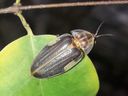
Aspisoma ignitum is a firefly ( Lampyridae) distributed across the Caribbean, Central America, North America, and South America. It represents one of the more broadly distributed Aspisoma species in the Neotropics. The species exhibits a distinctive color pattern compared to many North American fireflies, with yellow bearing black markings rather than the more common black-with-yellow pattern. It has been recorded as active during daylight hours, differing from the typical or activity of most fireflies.
Pronunciation
How to pronounce Aspisoma ignitum: /æˈspaɪsɒmə ɪɡˈnaɪtəm/
These audio files are automatically generated. While they are not always 100% accurate, they are a good starting point.
Identification
Yellow with black markings, contrasting with the black-with-yellow pattern typical of many North American fireflies. Terminal abdominal segments dark while remaining segments light—opposite the pattern seen in most other fireflies. Pronotum with highly explanate (flanged) hood that covers softer underparts when threatened. Daytime activity distinguishes it from firefly .
Images
Habitat
Soybean fields and agricultural areas in Argentina; broader range across Neotropics not well documented.
Distribution
Caribbean, Central America, North America, and South America. Presence in the United States uncertain. Confirmed in Puerto Rico (new record). Observed in Buenos Aires Province, Argentina.
Behavior
Active during daylight hours rather than or periods typical of most fireflies. When threatened, hunkers down and uses the pronotal flange to protect softer underparts.
Similar Taxa
- Aspisoma sp. #8 (PyBio.org reference)Photographic match in Paraguay biodiversity database; specific identity unresolved due to incomplete South American lampyrid
- Aspisoma spp. #51, 52, 53 (PyBio.org)Similar patterning; cannot be discounted based on available imagery