
Glyphonyx
Candèze, 1863
Species Guides
14Glyphonyx is a of click beetles ( Elateridae) containing at least 50 described . These beetles possess the characteristic clicking mechanism of their family, used to right themselves when overturned. The genus was established by Candèze in 1863 and is widely distributed across North America. Species identification within Glyphonyx generally requires examination of subtle morphological features.
Pronunciation
How to pronounce Glyphonyx: /ˈɡlɪf.əˌnɪks/
These audio files are automatically generated. While they are not always 100% accurate, they are a good starting point.
Identification
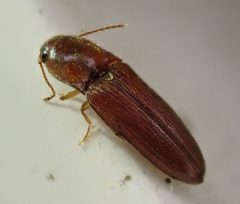
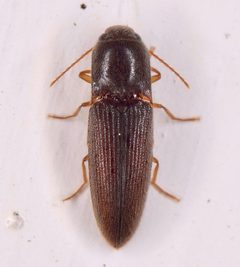
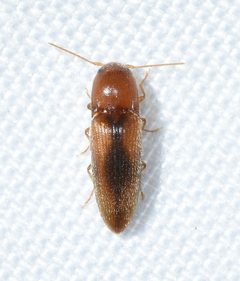
Glyphonyx are small to medium-sized click beetles, usually with elongated, somewhat parallel-sided bodies. They typically have dark coloration, often black or dark brown, sometimes with lighter markings. Distinguishing Glyphonyx from other elaterid requires examination of antennal structure, pronotal shape, and elytral striation patterns. Species-level identification is challenging and usually requires dissection of male genitalia.
Images
Distribution
North America, with distributed across the United States and Canada. Specific range boundaries for most species remain poorly documented.
Behavior
Possesses the clicking mechanism characteristic of Elateridae: a prosternal spine engages with a mesosternal groove to produce a sudden snap that can propel the into the air, enabling it to right itself when flipped onto its back.
Ecological Role
Larvae of Glyphonyx, like other elaterids, are soil-dwelling and likely contribute to soil nutrient cycling through their feeding activities. are probably feeders in vegetation.
Human Relevance
Glyphonyx have no documented economic importance. They are not known agricultural pests and receive limited attention from collectors due to their cryptic appearance and identification difficulties.
Similar Taxa
- AgriotesAnother large of small dark click beetles; distinguished by differences in pronotal shape and antennal structure
- DalopiusSimilar in size and coloration; separation requires examination of prosternal spine and mesosternal groove configuration
- MelanotusOverlaps in size and general form; differs in details of pronotal punctation and antennal serration
More Details
Taxonomic challenges
Glyphonyx is taxonomically difficult, with many described based on subtle morphological differences. Modern revisionary work using molecular data is lacking, and species boundaries remain uncertain for several .
Data gaps
Despite containing over 50 , Glyphonyx has received limited dedicated study. Most species are known from few specimens, and biological data (larval habits, associations, seasonality) are sparse or absent for the majority of .