
Melanotus opacicollis
LeConte, 1866
Melanotus opacicollis is a of click beetle in the Elateridae, described by LeConte in 1866. The Melanotus includes numerous species whose larvae are agricultural pests, though specific information about this species is limited. As with other members of the genus, the larval stage likely lives in soil and may feed on plant roots.
Pronunciation
How to pronounce Melanotus opacicollis: /ˌmɛləˈnoʊtəs ˌoʊpəsɪˈkɒlɪs/
These audio files are automatically generated. While they are not always 100% accurate, they are a good starting point.
Identification
Specific diagnostic features distinguishing M. opacicollis from other Melanotus are not documented in the provided sources. Identification to species within Melanotus typically requires examination of male genitalia and detailed morphological analysis by .
Images
Appearance
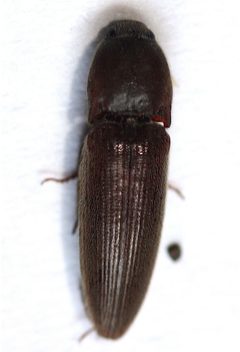
are click beetles with the characteristic elongated body form and pronotal structure that produces the clicking mechanism. Specific coloration and body dimensions for M. opacicollis are not well documented in readily available sources.
Habitat
information specific to M. opacicollis is not available. Related in the are generally associated with soil environments in agricultural and natural settings.
Distribution
Distribution records for M. opacicollis specifically are sparse. The Melanotus is widely distributed across North America, with numerous occurring in various regions.
Life Cycle
Behavior
possess the clicking mechanism characteristic of Elateridae, which allows them to right themselves when flipped onto their backs. Specific behavioral observations for M. opacicollis are not recorded.
Human Relevance
The agricultural significance of M. opacicollis specifically is unknown. Some Melanotus are known as crop pests due to root-feeding larvae, but this species has not been specifically implicated in economic damage.
Similar Taxa
- Melanotus communisAnother Melanotus that has been studied as an agricultural pest; M. communis is specifically mentioned in research on corn wireworm management in potatoes, whereas M. opacicollis lacks such documented economic studies.
- Other Elateridae generaClick beetles in related such as Limonius and Agriotes share similar and larval ; precise identification requires examination of structural details.
More Details
Taxonomic note
The name 'opacicollis' refers to the pronotum (collar region), suggesting a dull or non-shiny appearance of this body part, which may aid in identification when compared to more metallic .