Pseudanostirus triundulatus
(Randall, 1838)
Three-spotted Click Beetle
Pseudanostirus triundulatus is a of click beetle in the Elateridae, commonly known as the Three-spotted Click Beetle. It is a moderately sized with distinctive elytral markings. The species is widely distributed across Canada and has been documented in multiple provinces. It belongs to a of click beetles characterized by specific morphological features in the pronotum and prosternal process.
Pronunciation
How to pronounce Pseudanostirus triundulatus: /ˌsjuːdəˈnɒstɪrəs ˌtraɪʌnˈduːlətəs/
These audio files are automatically generated. While they are not always 100% accurate, they are a good starting point.
Identification
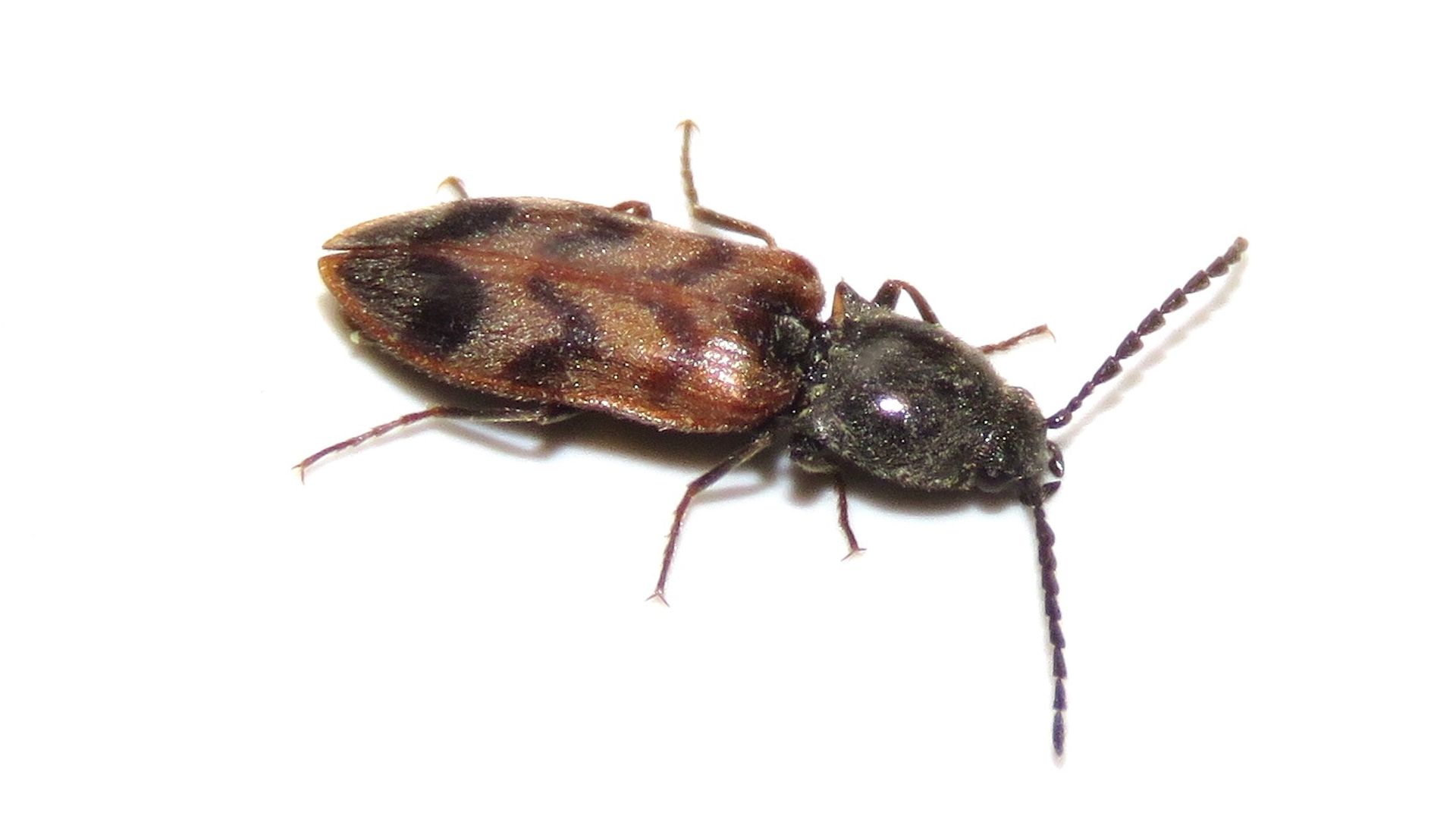
Distinguished from other Pseudanostirus by the three distinct dark markings on the . The combination of serrate , specific pronotal shape with angles adapted for the click mechanism, and the characteristic elytral pattern separates it from similar click beetles in the Elateridae. May be confused with other spotted elaterids, but the specific arrangement and number of elytral spots is diagnostic.
Images
Appearance
Moderately sized click beetle with three prominent dark spots or undulating markings on the yellowish to brownish , corresponding to the epithet "triundulatus." The pronotum is typically darker than the elytra and may have variable patterning. are serrate. Body form is elongate and somewhat flattened, typical of the Elateridae.
Habitat
Found in forested and wooded across its Canadian range. Specific microhabitat preferences are not well documented but likely include areas with decaying wood and soil litter typical for click beetle larvae.
Distribution
Canada: Alberta, British Columbia, Labrador, Manitoba, and New Brunswick. The appears to be broadly distributed across and temperate regions of Canada.
Seasonality
activity period not precisely documented; likely active during spring and summer months typical for temperate click beetles.
Life Cycle
Complete with , larval, pupal, and stages. Larvae (wireworms) are soil-dwelling and likely feed on decaying organic matter and root material, as is common in Elateridae, though specific details for this are not documented.
Behavior
Possesses the characteristic "click" mechanism of Elateridae, where the can flex its body to produce a clicking sound and propel itself into the air to escape or right itself when overturned.
Ecological Role
Larvae likely contribute to soil nutrient cycling through feeding on decaying organic matter. may serve as prey for insectivorous birds and other .
Human Relevance
No documented economic importance. The suggests it may be encountered by naturalists and entomologists in Canada.
Similar Taxa
- Other Pseudanostirus speciesShare -level characteristics including pronotal structure and general body form; distinguished by elytral pattern
- Other spotted Elateridae (e.g., some Ampedus or Agriotes)May have similar spotted elytral patterns; separated by structure, pronotal shape, and specific arrangement of markings
More Details
Taxonomic history
Originally described by Randall in 1838. The epithet "triundulatus" refers to the three wavy or undulating markings on the .
iNaturalist observations
Documented in 312 observations on iNaturalist, indicating it is regularly encountered and photographed by citizen scientists in Canada.