Pseudanostirus
Dolin, 1964
Species Guides
6- Pseudanostirus hoppingi
- Pseudanostirus laricis
- Pseudanostirus nebraskensis
- Pseudanostirus ochreipennis(Ochre Click Beetle)
- Pseudanostirus tigrinus
- Pseudanostirus triundulatus(Three-spotted Click Beetle)
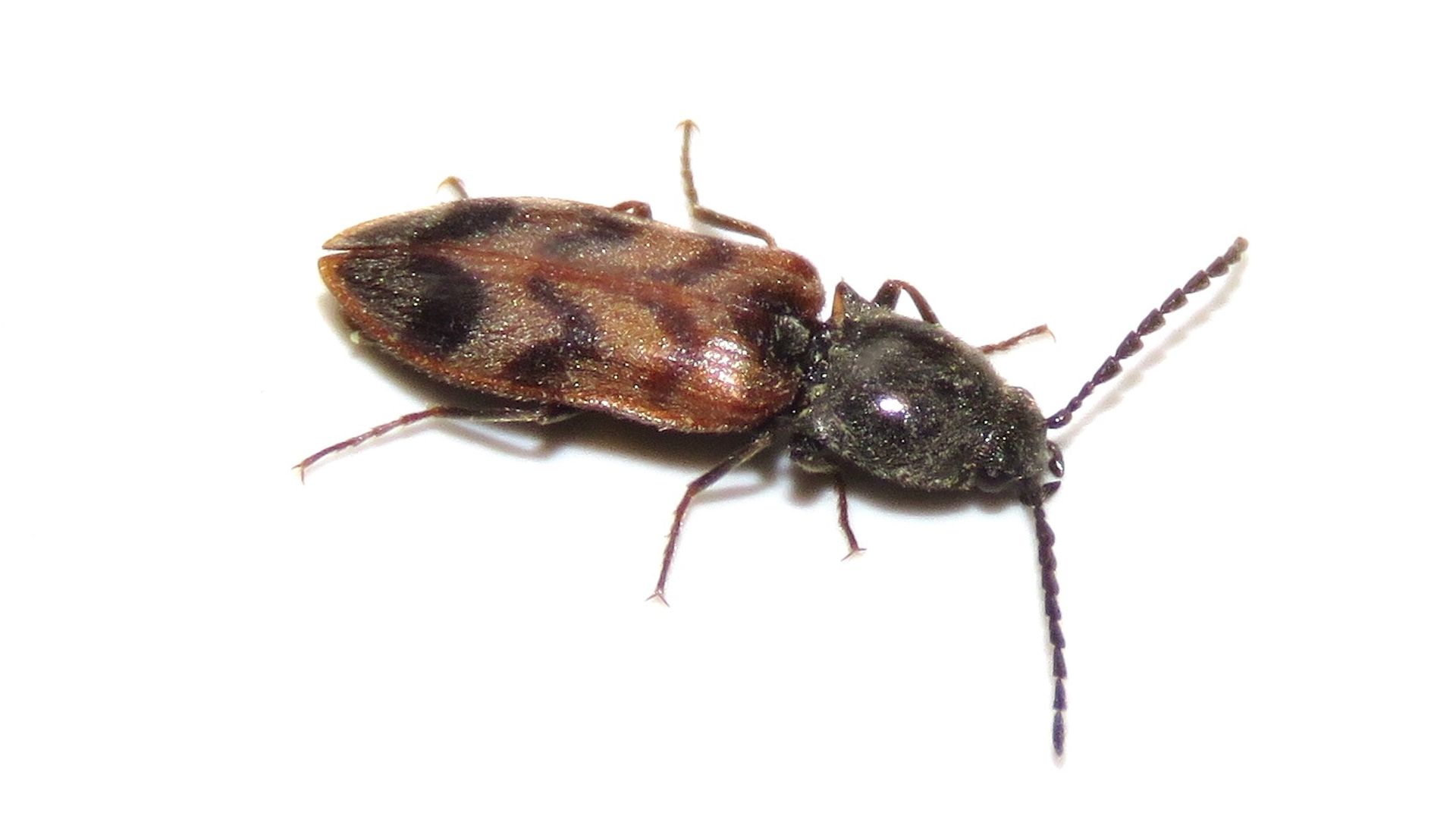
Pseudanostirus is a of click beetles (Elateridae) established by Dolin in 1964. The genus is distributed across parts of northern Europe and North America, with documented records from Norway, Sweden, and the northeastern United States including Vermont. As a member of the click beetle , in this genus possess the characteristic prosternal process that enables the defensive clicking mechanism. The genus contains multiple species, though specific ecological details remain limited in published literature.

Pronunciation
How to pronounce Pseudanostirus: /ˌpsjuːdænˈɒstɪrəs/
These audio files are automatically generated. While they are not always 100% accurate, they are a good starting point.
Identification
Members of Pseudanostirus can be distinguished from related elaterid by combinations of antennal structure, pronotal shape, and body proportions. The genus name suggests similarity to Anostirus, from which it likely differs in specific morphological characters such as antennal serration patterns or prosternal spine . Accurate identification to level requires examination of male genitalia and detailed morphometric analysis.
Images
Distribution
Documented from Norway, Sweden, and the northeastern United States (Vermont). The transatlantic distribution pattern suggests either a boreo-montane relict distribution or potential cryptic diversity requiring taxonomic revision.
Similar Taxa
- AnostirusClosely related from which Pseudanostirus was separated; distinguished by subtle differences in antennal and prosternal as indicated by the prefix 'pseudo-' (meaning false or resembling)
- AmpedusAnother elaterid with similar body form; Pseudanostirus generally differ in antennal structure and lack the bright coloration common in many Ampedus species
More Details
Taxonomic history
The was erected by Ukrainian entomologist Wladyslaw Dolin in 1964, reflecting continued refinement of elaterid classification in the mid-20th century. The transatlantic distribution has prompted questions about boundaries and whether North American and European represent or distinct species.
Research needs
Basic biological information including larval , associations, and detailed distribution patterns remains poorly documented for most Pseudanostirus . The 654 iNaturalist observations suggest potential for citizen science contributions to understanding this .