
Limonius subauratus
LeConte, 1853
Columbia Basin Wireworm
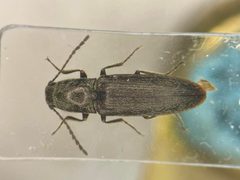
Limonius subauratus, commonly known as the Columbia Basin , is a of click beetle in the Elateridae. The species is found in North America, with confirmed distribution records from Canadian provinces including Manitoba, Saskatchewan, British Columbia, and New Brunswick. The larval stage, referred to as a wireworm, is the economically significant form. Research has been conducted on synthetic for monitoring this and related Limonius species.
Pronunciation
How to pronounce Limonius subauratus: //lɪˈmoʊniəs ˌsʌbɔːˈræˌtʊs//
These audio files are automatically generated. While they are not always 100% accurate, they are a good starting point.
Images
Distribution
Confirmed records from Manitoba, Saskatchewan, British Columbia, and New Brunswick in Canada. The suggests association with the Columbia Basin region, though precise range boundaries remain incompletely documented.
Life Cycle
Has a larval stage known as a , which is the prolonged and economically significant developmental phase typical of Elateridae. Specific details on duration or number of instars are not documented for this .
Human Relevance
Subject of research on management strategies using synthetic for monitoring and potentially controlling . The larval stage likely impacts agricultural crops, as is characteristic of the , though specific crop associations for this are not documented.
Similar Taxa
- Limonius spp.Other in the share similar and larval . Synthetic research indicates multiple Limonius species co-occur and are captured using similar trapping methods.
- Melanotus communisAnother elaterid with which management research has been conducted; both are targets of and fungal biocontrol studies.
More Details
Research Context
This has been included in studies evaluating synthetic Limonius for trap captures across various North American locations, indicating ongoing applied research interest in monitoring and management.