
Meristhus
Candèze, 1857
Species Guides
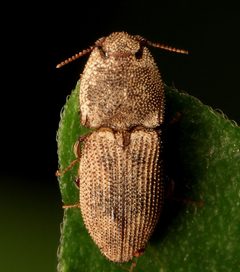
1Meristhus is a of click beetles (Elateridae) established by Candèze in 1857. As a member of this large , in this genus possess the characteristic clicking mechanism that allows them to right themselves when flipped. The genus is relatively poorly documented in modern literature, with limited species-level revision and few recent taxonomic treatments.
Pronunciation
How to pronounce Meristhus: /ˈmɛrɪsθəs/
These audio files are automatically generated. While they are not always 100% accurate, they are a good starting point.
Identification
Members of Meristhus can be recognized as elaterid beetles by the prosternal process that fits into a mesosternal cavity, enabling the defensive clicking mechanism. Generic-level identification requires examination of antennal structure, body proportions, and details of the pronotal and elytral sculpturing. Specific characters distinguishing Meristhus from related such as Agriotes or Dalopius include details of the pronotal hind angles and the form of the tarsal claws, though precise diagnostic features require reference to original Candèze descriptions or specialized taxonomic keys.
Images
Distribution
The has been recorded from the Palearctic region, with historical records suggesting a distribution centered in Europe and potentially extending into adjacent regions. Specific country records are sparse in modern databases.
Behavior
As with all Elateridae, possess the ability to flex the body suddenly using the prosternal-mesosternal , producing an audible click that can propel the into the air to escape .
Ecological Role
Larvae of Elateridae (wireworms) generally function as soil-dwelling or root-feeders, contributing to nutrient cycling and soil processes. The specific ecological role of Meristhus has not been documented separately from the -level pattern.
Similar Taxa
More Details
Taxonomic status
Meristhus remains one of the many elaterid described by Ernest Candèze in the mid-19th century that have received limited subsequent taxonomic attention. The genus may be subject to future revision as molecular clarifies relationships within the economically important Agriotes-lineage of click beetles.