Malthininae
Kiesenwetter, 1852
soldier beetles
Tribe Guides
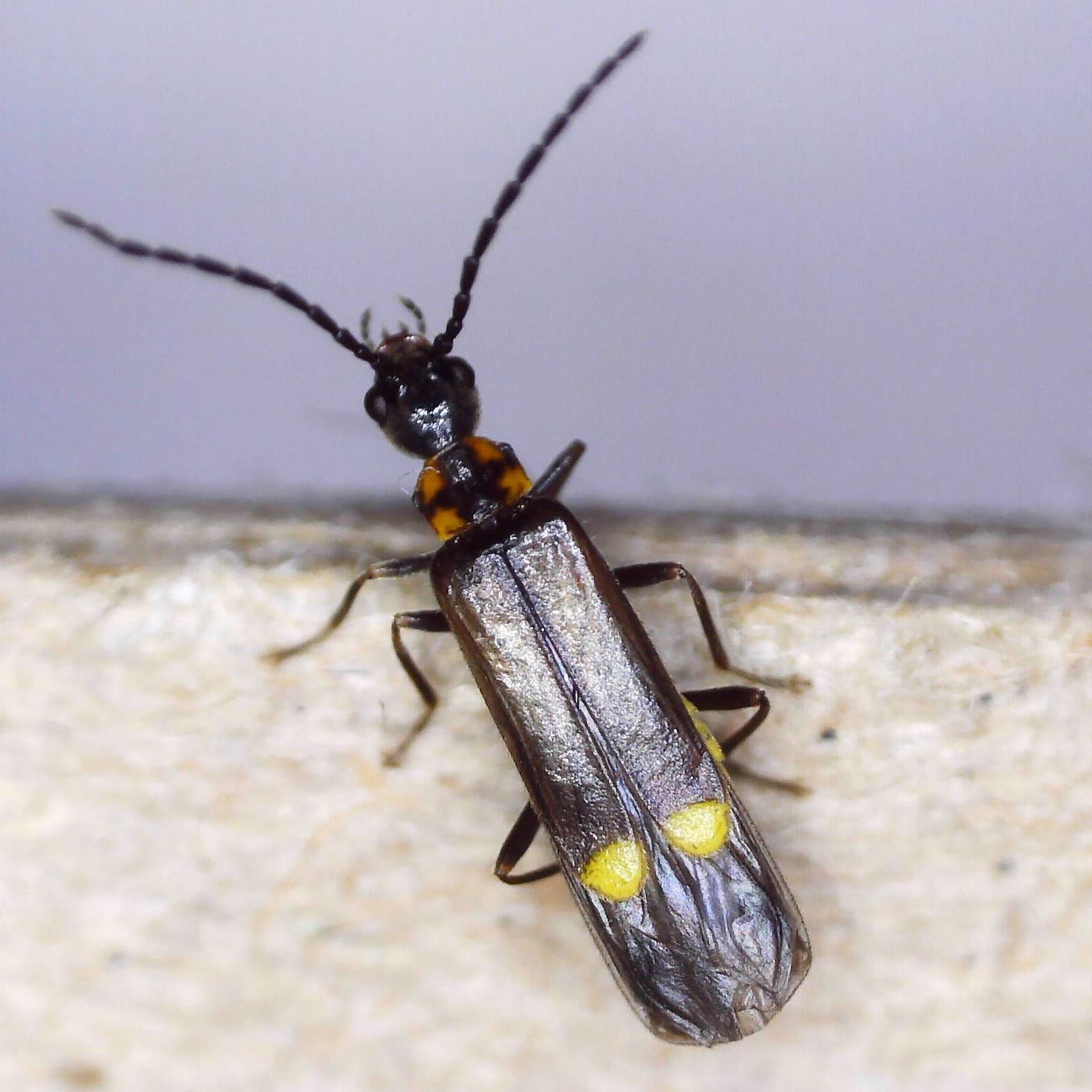
2Malthininae is a of soldier beetles (Cantharidae) first described by Kiesenwetter in 1852. The subfamily has a significant fossil record extending back to at least the Late Cretaceous, with specimens preserved in Burmese amber approximately 99 million years old. Fossil evidence from Baltic amber indicates Malthininae was diverse and abundant in Eocene Europe. The subfamily includes extant such as Malthinus and Malthodes, as well as extinct genera including Archaeomalthodes and Nothotytthonyx.
Pronunciation
How to pronounce Malthininae: //mælˈθɪnɪˌniː//
These audio files are automatically generated. While they are not always 100% accurate, they are a good starting point.
Images
Habitat
Extant occur in terrestrial environments; fossil evidence indicates presence in humid, warm forest during the Eocene (Baltic amber forests) and mid-Cretaceous amber forests of northern Myanmar.
Distribution
distribution for extant members. Fossil records documented from Upper Cretaceous Burmese amber (northern Myanmar), Eocene Baltic amber (Europe), and mid-Cretaceous Burmese amber (Hukawng Valley, Kachin State, Myanmar at 26°20'N, 96°36'E). Biogeographic evidence suggests possible Gondwanan origin during the Mesozoic.
Behavior
Morphological similarity between fossil Archaeomalthodes and modern malthinines, combined with occurrence of angiosperms in Burmese amber deposits, implies possible flower-visiting for this fossil . This inference remains speculative pending direct behavioral evidence.
Human Relevance
Fossil serve as important index fossils for understanding the evolutionary history of Cantharidae and the timing of diversification. The discovery of Archaeomalthodes rosetta has been described as a 'Rosetta Stone' for research on ancient soldier beetles, providing key insights into early Malthininae and evolution.
Similar Taxa
- CantharinaeCantharinae shares -level characters with Malthininae but typically exhibits well-developed gonostyli on the female ovipositor; Malthininae generally has reduced or absent gonostyli, though fossil Nothotytthonyx shows atypical well-developed gonostyli creating character conflict.
- SilinaeAnother within Cantharidae; Malthininae can be distinguished by symmetrical maxillary palpomeres, shortened , pronotum with arched margins and well-defined borders, tibiae with apical spurs, and simple tarsal claws.
More Details
Fossil Diversity
Malthininae represents the major component of described fossil cantharids, with 25 fossil in 16 documented as of the description of Archaeomalthodes rosetta. This suggests considerable early diversity during the evolution of Cantharidae.
Taxonomic Uncertainty
Placement of some fossil remains tentative due to conflicting morphological characters. Nothotytthonyx serratus exhibits well-developed gonostyli considered aberrant for Malthininae and more typical of Cantharinae, requiring careful evaluation of assignment.
Evolutionary Significance
Archaeomalthodes rosetta documents the oldest confirmed occurrence of Malthininae, establishing a minimum age of Late Cretaceous for the 's origin. This predates the oldest previously known fossil records and provides calibration for molecular dating studies.
Sources and further reading
- BugGuide
- iNaturalist taxon
- NCBI Taxonomy
- Catalogue of Life
- New Soldier Beetle Species Found in 99-million-year-old Amber
- Research News Archives - Page 112 of 155 - Entomology Today
- Two new fossil species of soldier beetles (Coleoptera, Cantharidae, Malthininae) from Baltic amber
- A new Malthinus (Coleoptera: Cantharidae: Malthininae) adds to the unrivaled diversity of arthropods found in Eocene Baltic amber
- Nothotytthonyx, a new genus of Malthininae (Coleoptera, Cantharidae) from mid-Cretaceous amber of northern Myanmar.