
Chauliognathus
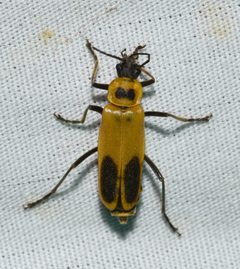
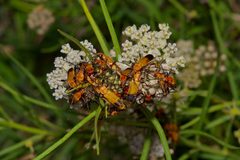
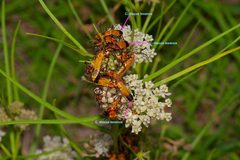
An undescribed species within the soldier beetle Chauliognathus, known from field observations in southern Arizona. The genus comprises soft-bodied beetles commonly called leatherwings or soldier beetles, characterized by their elongated bodies and frequent association with flowers. This particular specimen was encountered during a targeted collecting trip for cerambycid beetles in September 2019.
Pronunciation
How to pronounce Chauliognathus: //ˌkaʊ.li.oʊɡˈneɪ.θəs ˌʌn.dɪˈskraɪbd spiː//
These audio files are automatically generated. While they are not always 100% accurate, they are a good starting point.
Identification
This undescribed species would key to the Chauliognathus based on soft, flexible ; elongated, parallel-sided body form; and . Distinction from described would require examination of specific combinations of coloration, pronotal and elytral maculation patterns, antennal proportions, and male genitalia. The genus is distinguished from similar Cantharidae by the complete elytra covering the and characteristic tarsal formula.
Images
Distribution
Known from a single collection locality in the Tumacacori Mountains of southern Arizona, specifically Walker Canyon.
Seasonality
Observed in early September, suggesting late summer to early fall activity period.
Similar Taxa
- Chauliognathus profundusSympatric congeneric found in the same locality (Walker Canyon) and same time period; distinguished by specific coloration and body proportions
- Chauliognathus lewisiAnother sympatric congeneric in the region; the undescribed species would need comparison against this common southwestern for proper differentiation
Sources and further reading
- BugGuide
- Soggy death to friendly soldiers: Soldier beetles, Chauliognathus pennsylvanicus, and their deadly fungus, Entomophthora lampyridarum — Bug of the Week
- Meloidae | Beetles In The Bush | Page 3
- Halictidae | Beetles In The Bush
- Pixelated Entomology: Analyzing Beetles' Flower Use Through Digital Samples