
Chauliognathus profundus
LeConte, 1858
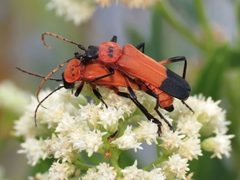
Chauliognathus profundus is a soldier beetle ( Cantharidae) distributed across Central and North America. It has been documented in the southwestern United States, particularly in Arizona, where it occurs in montane and canyon . The has been observed feeding on other insects, including on conspecifics and related cantharid species.

Pronunciation
How to pronounce Chauliognathus profundus: //kaʊˌliːoʊɡˈnæθəs proʊˈfʌndəs//
These audio files are automatically generated. While they are not always 100% accurate, they are a good starting point.
Identification
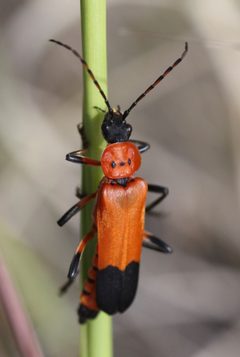
Chauliognathus profundus can be distinguished from other Chauliognathus by its relatively large size among soldier beetles and robust body form. It appears more cylindrical and robust compared to some . Accurate identification typically requires examination of genitalia or comparison with reference specimens.
Images
Habitat
Documented from montane and canyon in the southwestern United States, including Walker Canyon in the Tumacacori Mountains of Arizona. Associated with areas supporting flowering vegetation, particularly composites (Asteraceae) such as Gutierrezia microcephala and Pseudognaphalium leucocephalum.
Distribution
Central America and North America. Specific records from Arizona (Tumacacori Mountains, Walker Canyon; road to Kitt Peak), with broader distribution across the southwestern United States and into Mexico.
Seasonality
have been collected in September in Arizona. Activity appears to coincide with late summer flowering of plants.
Diet
Predatory. Has been observed feeding on other cantharid beetles, including Chauliognathus lewisi. Likely on small insects and other arthropods found on flowers.
Host Associations
- Gutierrezia microcephala - foraging site found on flowers
- Pseudognaphalium leucocephalum - foraging site found on flowers in Walker Canyon
- Chauliognathus lewisi - preyDocumented event
Behavior
Active on flowers during daylight hours. Documented as a of other soldier beetles. One observation describes an individual capturing and feeding on Chauliognathus lewisi.
Ecological Role
in flower-visiting insect . May contribute to regulation of other cantharid and serve as prey for larger predatory insects such as robber flies and bee assassin bugs.
Similar Taxa
- Chauliognathus lewisiSimilar size and coloration; sympatric in Arizona. C. profundus has been observed preying on C. lewisi, suggesting they occupy similar and may be confused in the field.
- Chauliognathus pennsylvanicusWidespread eastern North American with similar general appearance; distinguished by geographic range and subtle morphological differences.
More Details
Predatory behavior documentation
A notable field observation from Walker Canyon, Arizona (September 2019) documented C. profundus actively feeding on a captured C. lewisi. This predatory distinguishes it from the primarily nectar-feeding habits often assumed for soldier beetles.
Collection history
The has been collected by sweeping vegetation and hand-picking from flowers. It appears to be encountered less frequently than some sympatric Chauliognathus species, suggesting it may be less abundant or more restricted in use.