
Hypothenemus californicus
Hopkins, 1915
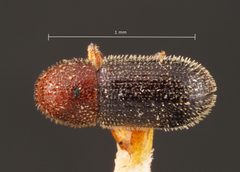
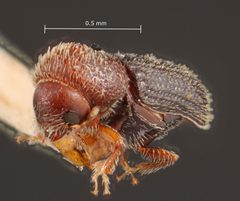
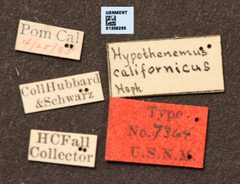
Hypothenemus californicus is a small weevil in the Curculionidae, first described by Hopkins in 1915. The is distributed across North America, parts of South America, Africa, and the Galápagos Islands. Like other members of the Hypothenemus, it is likely associated with woody plants, though specific ecological details remain poorly documented. The species name references California, indicating the type locality or region of original description.
Pronunciation
How to pronounce Hypothenemus californicus: /haɪpoʊˈθɛnɪməs ˌkæləˈfɔrnɪkəs/
These audio files are automatically generated. While they are not always 100% accurate, they are a good starting point.
Identification
Hypothenemus californicus can be distinguished from by genitalic and other subtle morphological features, though detailed diagnostic characters require examination. The Hypothenemus contains numerous small, morphologically similar , making accurate identification challenging without reference to or expert taxonomic resources. The species is smaller than many other curculionid weevils, with the compact body form typical of bark beetles and related groups.
Images
Distribution
Recorded from North America (including California, the type locality), Middle America, South America (Brazil: Bahia, Mato Grosso do Sul, Paraíba, São Paulo), Africa, and the Galápagos Islands. The broad geographic range suggests either multiple introductions, cryptic , or historically underestimated capabilities.
Similar Taxa
- Hypothenemus hampeiThe , a major agricultural pest, is congeneric but differs in being specifically associated with coffee (Coffea) fruits and having a more restricted tropical distribution centered on coffee-growing regions.
- Other Hypothenemus speciesNumerous share similar size, body form, and general appearance; definitive separation requires examination of genitalic structures and other minute morphological details by .
More Details
Taxonomic note
The was described by A.D. Hopkins in 1915, a prominent early American forest entomologist. The broad modern distribution records may reflect taxonomic uncertainty, as small weevils in this are frequently misidentified or represent undescribed cryptic species.
Sources and further reading
- BugGuide
- GBIF taxonomy match
- iNaturalist taxon
- Catalogue of Life
- Bohart Museum: Learn about California's State Insect on UC Davis Picnic Day | Bug Squad
- Encyrtid Holdings | Entomology Research Museum
- California Has No State Bee--Yet! | Bug Squad
- Protecting American Coffee, Wine and Baseball Bats | Bug Squad
- Sex Attraction Pheromone Improves Detection of a Threatened Beetle
- Frequent Harvesting Proves Optimal for Managing Coffee Berry Borer in Hawaii