
Epacalles inflatus
Kissinger, 1964
Epacalles inflatus is a of weevil in the Curculionidae, described by Kissinger in 1964. The species was formerly classified under the Porrhodites as Porrhodites inflatus. Research has identified it as a potential of the subnivium—the air pocket beneath winter snowpack—where it remains active during winter months and is rare or inactive during summer.
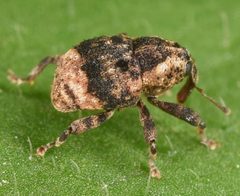
Pronunciation
How to pronounce Epacalles inflatus: /ɛpəˈkælɛs ɪnˈfleɪtəs/
These audio files are automatically generated. While they are not always 100% accurate, they are a good starting point.
Images
Habitat
Subnivium : the air-filled space between soil surface and overlying snowpack in northern forest . This microhabitat forms when ground warmth causes snow sublimation at the soil interface.
Distribution
North America. Documented from New Hampshire, USA in subnivium research.
Seasonality
Winter-active; present and active beneath snowpack during winter months. Rare or inactive during summer.
Behavior
Subnivium : active in winter beneath snowpack, possibly during summer months.
Ecological Role
One of four arthropods identified as potential subnivium , dominating this winter microhabitat . Role in forest remains incompletely understood.
Similar Taxa
- Arpedium cribratumAnother rove beetle (Staphylinidae) identified as a subnivium in the same study
- Lesteva pallipesAnother rove beetle (Staphylinidae) identified as a subnivium in the same study
- Cicurina brevisSpider identified as a subnivium in the same study
More Details
Taxonomic Note
The was transferred from Porrhodites to Epacalles, though it appears in subnivium literature under its former combination Porrhodites inflatus.
Conservation Concern
As a subnivium , this potential threat from climate change-driven reductions in winter snowpack, which would eliminate its specialized .
Sources and further reading
- BugGuide
- GBIF taxonomy match
- iNaturalist taxon
- Catalogue of Life
- sinophorus_inflatus_sanborne_holotype_female_ucrc_ent_283763_propodeum.jpg | Entomology Research Museum
- Primary Type List | Entomology Research Museum
- Porrhodites inflatus Archives - Entomology Today
- Secrets of the "Subnivium": Arthropod Community Thrives Beneath Winter Snowpack