
Conotrachelus naso
LeConte, 1876
Thin-nosed Curculio
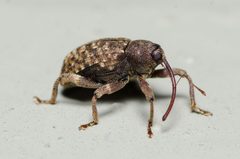
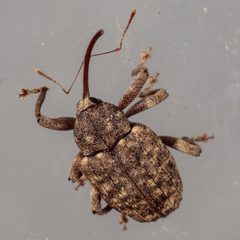
Conotrachelus naso is a of weevil in the Curculionidae, first described by LeConte in 1876. It occurs in North America. The species is commonly known as the Thin-nosed Curculio. As a member of the Conotrachelus, it shares the characteristic elongated snout typical of this weevil group, though specific ecological and behavioral details remain poorly documented compared to better-studied such as the .
Pronunciation
How to pronounce Conotrachelus naso: //ˌkoʊ.noʊ.trəˈkiː.ləs ˈneɪ.soʊ//
These audio files are automatically generated. While they are not always 100% accurate, they are a good starting point.
Identification
Conotrachelus naso can be distinguished from other Conotrachelus by its relatively slender, elongated rostrum (snout), which gives rise to its "Thin-nosed Curculio." The species lacks the more robust snout proportions seen in C. nenuphar (). Definitive identification requires examination of genitalic structures and comparison with , as external morphological differences among Conotrachelus species can be subtle.
Images
Distribution
North America. Specific distribution records within this range are sparse, with observations documented through citizen science platforms such as iNaturalist.
Similar Taxa
- Conotrachelus nenupharThe is the most economically significant and well-studied , differing in having a more robust rostrum and documented association with rosaceous fruit crops. C. naso has a noticeably more slender snout and lacks the extensive agricultural pest status of C. nenuphar.
- Other Conotrachelus speciesThe Conotrachelus contains numerous that are morphologically similar and difficult to distinguish without detailed examination. Many remain poorly characterized ecologically, and identification often requires taxonomic knowledge.
More Details
Taxonomic status
The is listed as provisionally accepted in the Catalogue of Life and accepted in GBIF. The authorship is sometimes cited as "Leconte, 1876" or "LeConte, 1876" depending on source.
Data availability
Despite over 1,000 observations on iNaturalist, peer-reviewed literature specifically addressing C. naso , , or economic importance appears to be minimal or absent. Most available information derives from taxonomic databases and citizen science records rather than formal research studies.
Sources and further reading
- BugGuide
- Wikipedia
- GBIF taxonomy match
- iNaturalist taxon
- NCBI Taxonomy
- Catalogue of Life
- Addie Abrams, Ph.D to Be, to Present Exit Seminar | Bug Squad
- Addie Abrams Targeting Aphids and Thrips in California Lettuce | Bug Squad
- Outstanding Group of UC Davis Graduate Students at ESA Meeting | Bug Squad
- Plum Curculio: New Guide Gathers IPM Recommendations for North American Fruit Pest
- To combat global change, scientists must prioritize community partnerships | Blog
- global change | Blog