
Conotrachelus duplex
Casey, 1892
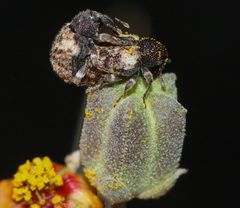
Conotrachelus duplex is a of weevil in the Curculionidae, described by Thomas L. Casey in 1892. It belongs to the Conotrachelus, a group of snout beetles that includes several economically important fruit pests such as the (C. nenuphar). The species is provisionally accepted in taxonomic databases and is recorded from North America. Very little specific biological information is available for this particular species.
Pronunciation
How to pronounce Conotrachelus duplex: /koʊnoʊˈtreɪkələs ˈduːplɛks/
These audio files are automatically generated. While they are not always 100% accurate, they are a good starting point.
Images
Distribution
North America (present, exact range details not specified in available sources)
Similar Taxa
- Conotrachelus nenupharThe is the most economically significant and well-studied member of the ; C. duplex may be confused with it due to shared genus-level morphological features, though C. nenuphar is specifically associated with rosaceous fruit crops
- Other Conotrachelus speciesMembers of this share the characteristic elongated snout (rostrum) and similar body plan, making -level identification difficult without examination of specific diagnostic features
More Details
Taxonomic Note
The is listed as 'provisionally accepted' in the Catalogue of Life, indicating some taxonomic uncertainty or need for further verification. The Conotrachelus contains approximately 24 described species in North America, with C. nenuphar being the most extensively studied due to its status as a major agricultural pest.
Data Limitations
Available sources provide only basic taxonomic information for C. duplex. The extensive field notes provided in the context document pertain to a 2023 collecting trip focused primarily on beetles in the Buprestidae, Cerambycidae, Scarabaeidae, and others, but do not mention this particular weevil . The iNaturalist record shows only a single observation, suggesting it is rarely encountered or underreported.