
Conotrachelus buchanani
Schoof, 1943
Hackberry Curculio
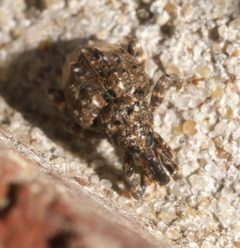
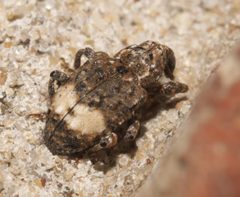
Conotrachelus buchanani is a weevil in the Curculionidae, commonly known as the Hackberry Curculio. It is native to North America and has been documented in association with Celtis occidentalis (common hackberry). The species was described by Schoof in 1943. Unlike the well-studied C. nenuphar (), a major fruit pest, C. buchanani has received limited research attention.
Pronunciation
How to pronounce Conotrachelus buchanani: /ˌkoʊnoʊˈtrækələs ˌbjuːkəˈnænaɪ/
These audio files are automatically generated. While they are not always 100% accurate, they are a good starting point.
Identification
May be distinguished from the economically significant () by association; C. buchanani is linked to hackberry (Celtis occidentalis) rather than rosaceous fruit trees. Specific morphological diagnostic features for separating this from other Conotrachelus species are not documented in available sources.
Images
Habitat
Associated with hackberry trees (Celtis occidentalis), suggesting in areas where this tree occurs, including deciduous woodlands, riparian corridors, and urban plantings.
Distribution
North America. Specific range boundaries within the continent are not well documented.
Diet
Larval and feeding habits are not explicitly documented. Association with Celtis occidentalis suggests potential feeding on hackberry tissues, though whether this involves fruit, seeds, or other plant parts is unconfirmed.
Host Associations
- Celtis occidentalis - associated withcommon hackberry; nature of association (feeding, oviposition, etc.) is unspecified in available sources
Human Relevance
Not documented as an agricultural or economic pest. Distinguished from the (C. nenuphar), which is a major pest of stone and pome fruits.
Similar Taxa
- Conotrachelus nenupharcongeneric commonly known as ; major economic pest of rosaceous fruits with well-documented , whereas C. buchanani is associated with hackberry and lacks pest status
More Details
Taxonomic note
Conotrachelus buchanani was described by Schoof in 1943. It is provisionally accepted in the Catalogue of Life and accepted in GBIF.
Research status
This has received minimal research attention compared to the extensively studied (C. nenuphar). Available information is limited to taxonomic records and association with Celtis occidentalis.