
Lixus placidus
LeConte, 1876
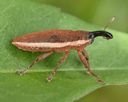
Lixus placidus is a of true weevil ( Curculionidae) native to North America. It was described by LeConte in 1876. The Lixus is a large and widespread group of weevils, commonly known as lollipop clover weevils or cabbage stem weevils, though specific for L. placidus are not established. Like other members of its genus, it possesses the characteristic elongated snout (rostrum) typical of weevils.
Pronunciation
How to pronounce Lixus placidus: /ˈlɪksʊs ˈplækɪdʊs/
These audio files are automatically generated. While they are not always 100% accurate, they are a good starting point.
Identification
No specific diagnostic features for Lixus placidus are documented in available sources. The can be identified to by the typical weevil : an elongated rostrum with mouthparts at the tip, elbowed (geniculate) , and compact body form. Species-level identification within Lixus requires examination of genitalia or other subtle morphological characters not detailed in available literature.
Images
Distribution
North America. Specific range details beyond continental distribution are not documented in available sources.
More Details
Taxonomic note
The specific epithet 'placidus' (meaning calm or peaceful in Latin) is shared with other insect , notably Lucanus placidus (a ). These are unrelated in different .
Sources and further reading
- BugGuide
- Wikipedia
- GBIF taxonomy match
- iNaturalist taxon
- Catalogue of Life
- Bembicid Holdings | Entomology Research Museum
- Stag and “stagette” beetle | Beetles In The Bush
- Diminishing Stag Beetle | Beetles In The Bush
- August | 2014 | Beetles In The Bush
- North America’s largest stag beetle | Beetles In The Bush