Panscopus impressus
Pierce, 1913
broad-nosed weevil
Panscopus impressus is a of broad-nosed weevil in the Curculionidae. The species was described by Pierce in 1913. It is found in North America, with specific distribution records from Alabama (Anderson, Blount, Clarke, Clay) and North Carolina (Buncombe). As a member of the broad-nosed weevil group, it possesses the characteristic short, broad rostrum typical of this within Curculionidae.
Pronunciation
How to pronounce Panscopus impressus: //pænˈskoʊ.pəs ɪmˈprɛs.əs//
These audio files are automatically generated. While they are not always 100% accurate, they are a good starting point.
Identification
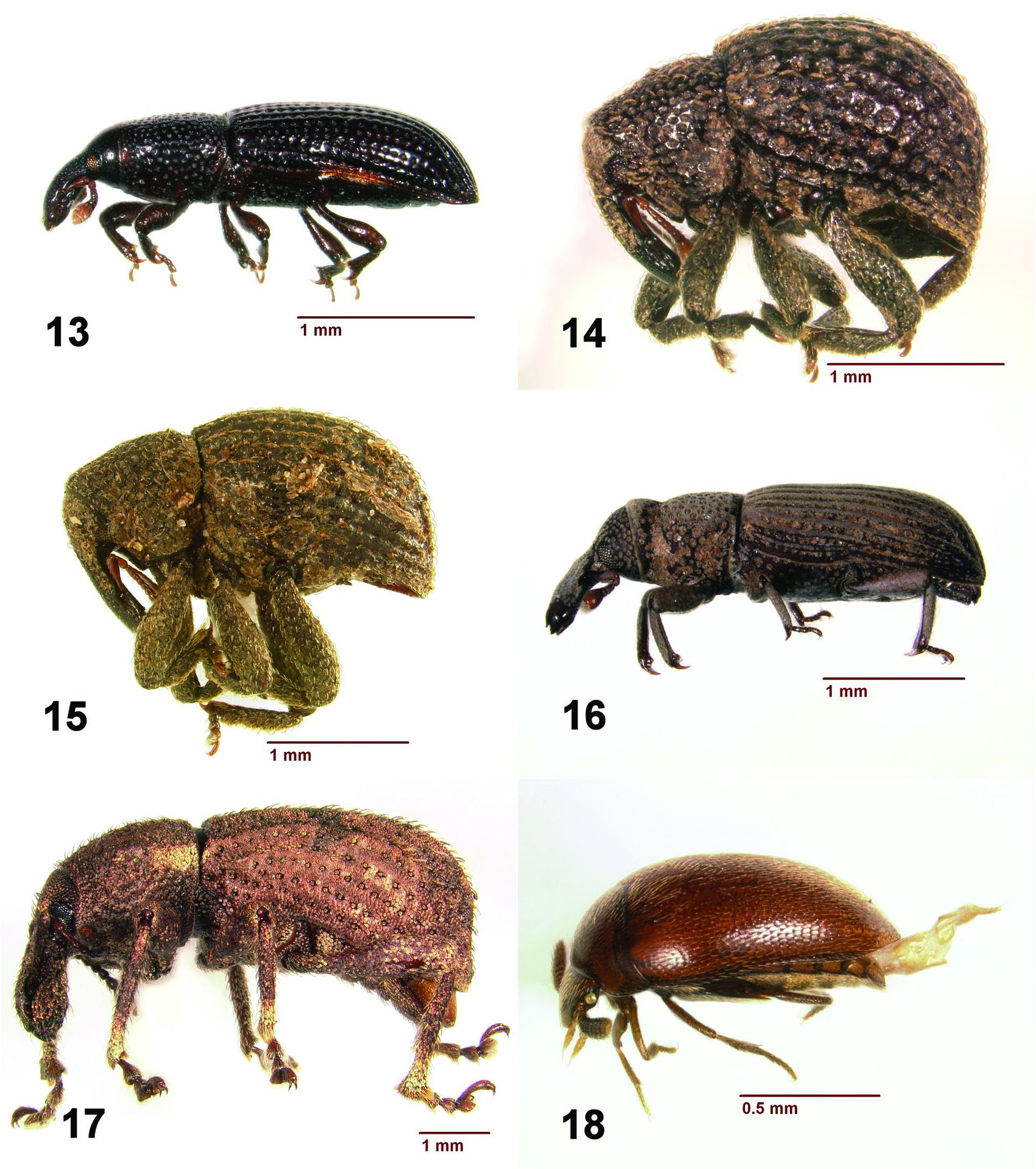
Identified as a broad-nosed weevil by the abbreviated, broad rostrum. Specific identification to level requires examination of the impressed surface features referenced in the species epithet, likely involving detailed examination of elytral or pronotal sculpturing. Distinguishing from other Panscopus species would require comparison of and reference to Pierce's 1913 original description.
Images
Distribution
North America. Specific county-level records documented from Alabama (Anderson, Blount, Clarke, Clay counties) and North Carolina (Buncombe County).
Similar Taxa
- Other Panscopus speciesSame , would share broad-nosed weevil ; distinguished by specific impressed markings and other subtle morphological differences
- Other broad-nosed weevils (various genera in Curculionidae)Share short, broad rostrum; distinguished by -level characters including body shape, tarsal structure, and genitalia
More Details
Taxonomic history
Described by Pierce in 1913. The Panscopus is classified within the Curculionidae, though some sources place it in Brachyceridae (a family sometimes treated as distinct from or subsumed within Curculionidae depending on classification system used).
Specimen records
Distribution data is sparse, with only five counties documented in GBIF records. The is represented by 29 observations in iNaturalist, suggesting it may be undercollected or genuinely uncommon.