
Cercopedius artemisiae
(Pierce, 1910)
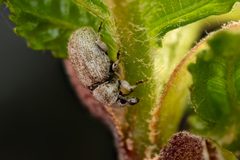
Cercopedius artemisiae is a weevil in the Curculionidae, described by Pierce in 1910. It belongs to the tribe Trachyphloeini within the Entiminae, a group of broad-nosed weevils. The species is known from scattered records across western North America, with observations in British Columbia and several western U.S. states. The specific epithet "artemisiae" suggests an association with Artemisia (sagebrush) plants, though this relationship requires confirmation.
Pronunciation
How to pronounce Cercopedius artemisiae: /sɛrkɔˈpiːdiʊs ɑrtɪˈmiːsiaɪ/
These audio files are automatically generated. While they are not always 100% accurate, they are a good starting point.
Identification
Members of the Cercopedius are small, compact weevils with a characteristic broad rostrum typical of Entiminae. Specific diagnostic features for C. artemisiae separating it from such as C. speratus have not been documented in accessible literature. Identification to level likely requires examination of male genitalia or other subtle morphological characters.
Images
Distribution
Recorded from British Columbia, Canada, and the western United States: Colorado, Idaho, Montana, and Nevada.
Host Associations
- Artemisia - probableSpecific epithet suggests association; not confirmed by direct observation records
Similar Taxa
- Cercopedius speratusCongeneric with overlapping western North American distribution; morphological separation requires detailed examination
More Details
Taxonomic note
The Cercopedius was established by Blatchley in 1916, with C. speratus as type . Cercopedius artemisiae was originally described in the genus Peritelus by Pierce in 1910 before transfer to Cercopedius.