
Hadromeropsis opalina
Horn, 1876
opaline broad-nosed weevil
Hadromeropsis opalina is a of broad-nosed weevil in the Curculionidae, described by Horn in 1876. The species is known from North America. As a member of the broad-nosed weevil group ( Entiminae), it possesses the characteristic elongated snout and elbowed typical of the family. Published records and observations remain limited.
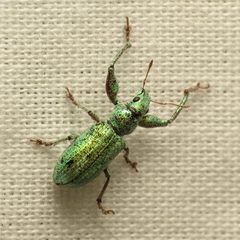
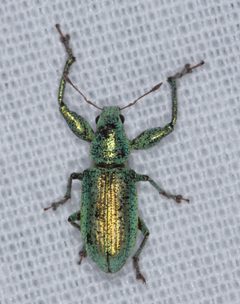
Pronunciation
How to pronounce Hadromeropsis opalina: /ˌhædrəˈmɛrəˌpsɪs ˌoʊpəˈlaɪnə/
These audio files are automatically generated. While they are not always 100% accurate, they are a good starting point.
Identification
As a broad-nosed weevil (Entiminae), possess a short, broad rostrum with geniculate (elbowed) that insert near its apex. The epithet "opalina" suggests a possible opalescent or iridescent quality to the , though this requires verification. Definitive identification to species level requires examination of genitalia and comparison with type material, as external characters among Hadromeropsis species are often subtle.
Images
Distribution
North America. Specific range details beyond continental-level occurrence are not established in available sources.
Similar Taxa
- Other Hadromeropsis speciesCongeneric share the broad-nosed weevil and require detailed examination for separation; the contains multiple North American species with subtle external differences.
- Other Entiminae generaBroad-nosed weevils across multiple share the short, broad rostrum and geniculate ; accurate identification relies on genitalic and other fine structural characters.
More Details
Nomenclature
The was described by George Henry Horn in 1876. The Hadromeropsis was established by Casey in 1922, with this species among those transferred to it from broader earlier concepts.
Observation status
As of source date, iNaturalist records 17 observations, indicating the is documented but not frequently encountered or reported.