
Hadromeropsis
Pierce, 1913
broad-nosed weevils
Species Guides
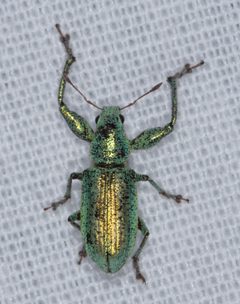
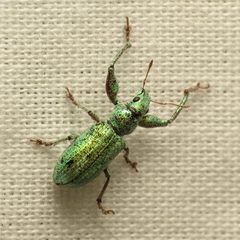
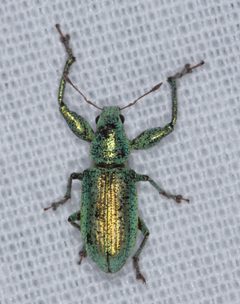
1- Hadromeropsis opalina(opaline broad-nosed weevil)
Hadromeropsis is a of broad-nosed weevils in the Curculionidae, first described by W. Dwight Pierce in 1913. The genus contains over 50 described distributed across Central and South America, ranging from Mexico to Argentina. Two subgenera are recognized: Hadromeropsis (Hadromeropsis) and Hadromeropsis (Hadrorestes), revised by Anne Howden in 1982. Species range from small to large (5–20 mm) and are characterized by specific morphological traits of the female .
Pronunciation
How to pronounce Hadromeropsis: /hədroʊməˈrɒpsɪs/
These audio files are automatically generated. While they are not always 100% accurate, they are a good starting point.
Identification
Distinguished from similar , particularly the South American genus Macropterus, by the combination of: un-sculptured ; non-carinate epistomal margin (though sometimes elevated distally); mandibular vestiture matching rostral vestiture; and non-produced pronotum. The elevated female ventrites 2–4 with sharply delimited edges is a diagnostic character for the genus. Howden (1982) provided the definitive revision for -level identification.
Images
Appearance
Small to large weevils, 5 to 20 mm in length. Body covered with that are never sculptured. margin of epistoma (rostral plate) never carinate or keeled, though margin elevated distally in some . with vestiture on lateral and surfaces similar to that of rostrum. Pronotum never produced anteriorly over vertex. Females with caudal surface of ventrites 2, 3, and 4 conspicuously elevated, often perpendicular or slanted anteriorly or posteriorly, with sharply delimited edge; this character less developed in males.
Distribution
Recorded from Mexico, Guatemala, Rica, Panama, Colombia, Ecuador, Peru, Venezuela, Brazil, Bolivia, Paraguay, Uruguay, and Argentina. The spans the Neotropical region from Central America through northern and central South America.
Similar Taxa
- MacropterusConsidered the most similar by Howden (1982); both are South American broad-nosed weevils, but Hadromeropsis differs in female abdominal structure and epistomal .
More Details
Taxonomic history
The was established by Pierce (1913) and revised by Anne Howden in 1982, who recognized two subgenera and treated Central American following earlier work by Champion.