
Pachyrhinus
Schönherr, 1823
Pine Needle Weevils
Species Guides
3- Pachyrhinus californicus(rusty pineneedle weevil)
- Pachyrhinus elegans
- Pachyrhinus ferrugineus
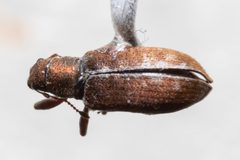
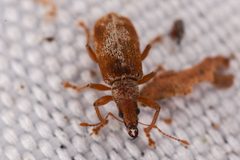
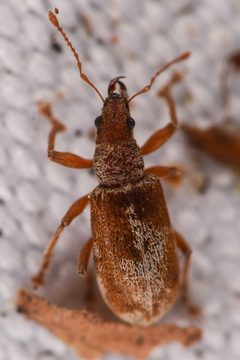
Pachyrhinus is a of weevils in the Curculionidae containing more than 30 described . Commonly known as pine needle weevils, members of this genus are herbivorous beetles with elongated snouts typical of weevils. The genus includes significant agricultural pests, notably Pachyrhinus yasumatsui (jujube bud weevil), which causes severe economic damage to Chinese jujube in northern China. A high-quality -level has been sequenced for Pachyrhinus lethierryi from England as part of the Darwin Tree of Life project.
Pronunciation
How to pronounce Pachyrhinus: /ˌpækɪˈraɪnəs/
These audio files are automatically generated. While they are not always 100% accurate, they are a good starting point.
Images
Distribution
The has been documented in England, United Kingdom (Battersea Park, Wetherby Gardens/Kensington, London) and northern China (Jiaxian County, Shaanxi province). Pachyrhinus yasumatsui is widespread in northern China. Pachyrhinus lethierryi has been collected from urban parkland in England. The broader geographic range of most remains poorly documented.
Human Relevance
Pachyrhinus yasumatsui is a major pest of Chinese jujube (Ziziphus jujuba), causing severe economic losses in the jujube industry through feeding damage to fresh buds and shoots. This has been the focus of research on chemosensory mechanisms to develop environmentally friendly pest management strategies, including monitoring tools based on -plant volatiles.
More Details
Chemosensory Research
Pachyrhinus yasumatsui has been extensively studied for its olfactory system. Research has identified 113 chemosensory genes including 41 odorant receptors, 28 odorant-binding proteins, 16 ionotropic receptors, 15 chemosensory proteins, 9 receptors, and 4 proteins. The odorant-binding protein PyasOBP2 binds strongly to -plant volatiles including ethyl butyrate, 2-methyl-1-phenylpropene, and dipentene.
Genomic Resources
The first high-quality assembly for the was generated for Pachyrhinus lethierryi in October 2025. The assembly comprises 619.57 Mb in 11 chromosomal pseudomolecules (10 + X ) with a mitochondrial genome of 21.74 kb. The exhibits X0 sex determination with no Y chromosome detected.
Sources and further reading
- BugGuide
- Wikipedia
- GBIF taxonomy match
- iNaturalist taxon
- NCBI Taxonomy
- Catalogue of Life
- Functional Characterization of Odorant Binding Protein PyasOBP2 From the Jujube Bud Weevil, Pachyrhinus yasumatsui (Coleoptera: Curculionidae)
- Identification and sex-specific expression of chemosensory genes in the antennal transcriptomes of Pachyrhinus yasumatsui (Coleoptera: Curculionidae)
- The genome sequence of the weevil, Pachyrhinus lethierryi (Desbrochers des Loges, 1875) (Coleoptera: Curculionidae).