Stomodes
Schönherr, 1826
broad-nosed weevils
Species Guides
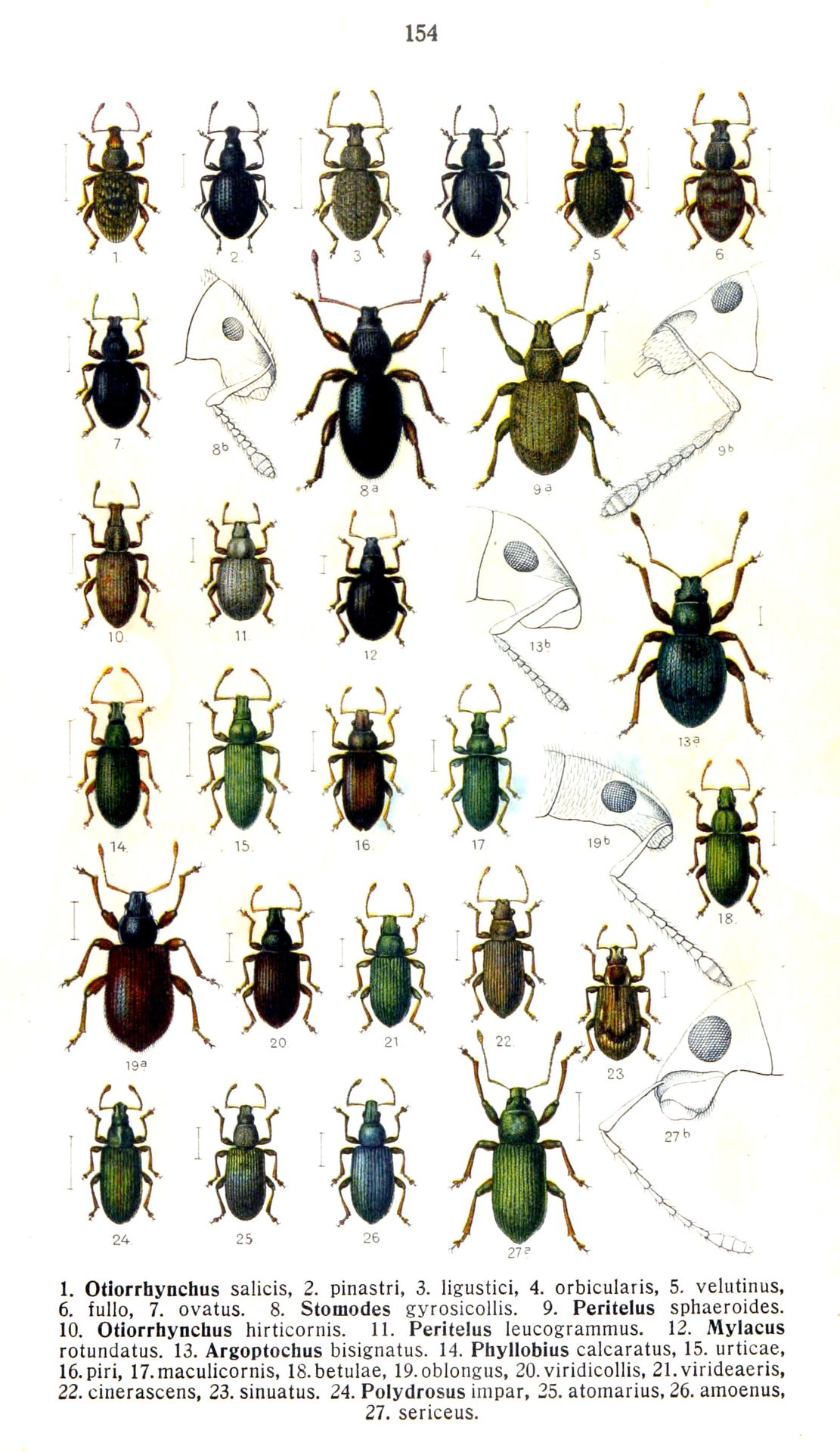
1- Stomodes gyrosicollis(broad-nosed weevil)
Stomodes is a of broad-nosed weevils in the Curculionidae, established by Schönherr in 1826. The genus comprises approximately 11 described distributed primarily in Europe and North Africa. Species within this genus are classified in the Entiminae and tribe Otiorhynchini. As with other entimine weevils, members likely possess a short, broad rostrum and elbowed .
Pronunciation
How to pronounce Stomodes: //ˈstɒməˌdiːz//
These audio files are automatically generated. While they are not always 100% accurate, they are a good starting point.
Identification
Members of Stomodes can be recognized as broad-nosed weevils (Entiminae) by their short, broad rostrum that does not extend far beyond the , distinguishing them from long-snouted weevils in other . Within Otiorhynchini, -level identification requires examination of specific morphological characters such as pronotal and elytral , body shape, and antennal club structure. The 11 described species vary in details of punctation and body proportions.
Images
Distribution
of Stomodes have been recorded from Europe and North Africa, based on species epithets and distribution records (e.g., Stomodes marocanus from Morocco). GBIF distribution records indicate presence in southeastern Europe.
Similar Taxa
- OtiorhynchusBoth belong to tribe Otiorhynchini and share the broad-nosed weevil ; Otiorhynchus is far more speciose and widely distributed, requiring careful examination of tarsal structure and genitalia for definitive separation
- BrachyderesAnother entimine with similar body form; differs in details of antennal insertion and scutellum shape
More Details
Taxonomic History
The was established by Schönherr in 1826 with Stomodes tolutarius as the type . The genus has remained relatively stable taxonomically, with 11 currently recognized species.
Data Availability
The is poorly represented in biodiversity databases, with only 19 observations recorded in iNaturalist as of the source date, suggesting it is either genuinely rare, under-collected, or difficult to identify in the field.