
Agronus carri
Buchanan, 1929
Carr's Broad-nosed Weevil
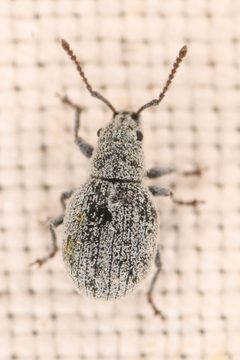
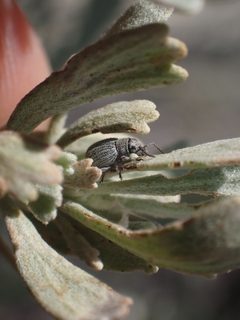
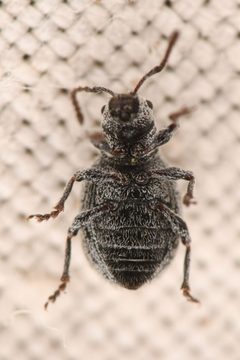
Agronus carri is a of broad-nosed weevil in the Curculionidae, described by Buchanan in 1929. It is known from western North America, with confirmed records from Alberta, British Columbia, and Montana. As a member of the Entiminae , it possesses the characteristic short, broad rostrum typical of broad-nosed weevils. The species is poorly documented in scientific literature beyond basic taxonomic description and distribution records.
Pronunciation
How to pronounce Agronus carri: //ˈæɡ.roʊ.nəs ˈkær.aɪ//
These audio files are automatically generated. While they are not always 100% accurate, they are a good starting point.
Identification
As a broad-nosed weevil (Entiminae), Agronus carri possesses a short, broad rostrum that is not strongly elongated as in other weevil . The Agronus is distinguished within the Otiorhynchini tribe by specific characters of the rostrum and , though precise diagnostic features for A. carri require examination of . likely show the compact body form and elbowed, clubbed antennae typical of the subfamily. Positive identification to level requires examination and comparison with described type material.
Images
Distribution
Recorded from western North America. Confirmed distribution records include the Canadian provinces of Alberta and British Columbia, and the U.S. state of Montana. The broader range within North America remains poorly defined due to limited collection records.
Similar Taxa
- Otiorhynchus spp.Other broad-nosed weevils in the same tribe Otiorhynchini share the short, broad rostrum and general body form, requiring careful examination of genitalia and other subtle characters for separation.
- Other Entiminae generaThe Entiminae contains numerous with similar external ; identification relies on detailed examination of rostral structure, antennal insertion, and other fine morphological details.
More Details
Taxonomic note
Agronus carri was described by Buchanan in 1929. The Agronus is classified in the tribe Otiorhynchini, Entiminae. The specific epithet 'carri' likely honors an individual, though the etymology is not explicitly documented in available sources.
Data deficiency
As of current knowledge, this is known from only 24 observation records (iNaturalist data) and appears in limited scientific literature beyond original description and taxonomic catalogues. Basic biological information including preferences, associations, and remains undocumented.
Sources and further reading
- BugGuide
- Wikipedia
- GBIF taxonomy match
- iNaturalist taxon
- Catalogue of Life
- Deerly departed: food for flesh-recycling carrion beetles - Margined carrion beetle, Oiceoptoma noveboracense, and American carrion beetle, Necrophila americana — Bug of the Week
- Bug Eric: Another Odd Carrion Beetle
- Why is this male carrion beetle “biting” one of the female’s antennae? | Beetles In The Bush
- Bug Eric: A Carrion Beetle That Isn't?
- Soil carried on sea freight loaded with dangerous pests and diseases | Blog
- New Study Illuminates Dung Beetles' Attraction to Death