
Epicaerus imbricatus
(Say, 1824)
Imbricated Snout Beetle
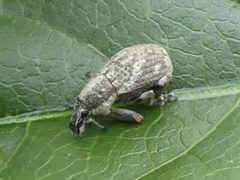
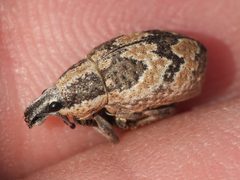
Epicaerus imbricatus is a of broad-nosed weevil in the Curculionidae. It is commonly known as the imbricated snout . The species is found in North America, with records from Arkansas, Colorado, District of Columbia, Georgia, and Indiana. As a member of the Entiminae , it possesses the characteristic short, broad rostrum typical of broad-nosed weevils.
Pronunciation
How to pronounce Epicaerus imbricatus: /ˌɛpɪˈsɪərəs ˌɪmbrɪˈkeɪtəs/
These audio files are automatically generated. While they are not always 100% accurate, they are a good starting point.
Identification
As a broad-nosed weevil ( Entiminae), E. imbricatus can be distinguished from other weevil subfamilies by its short, broad rostrum that does not extend far beyond the . The specific epithet "imbricatus" refers to an overlapping, -like pattern, suggesting distinctive elytral . -level identification within Epicaerus requires examination of genitalic characters and detailed elytral patterning.
Images
Distribution
North America: recorded from Arkansas, Colorado, District of Columbia, Georgia, and Indiana.
Similar Taxa
- Other Epicaerus speciesCongeneric share the broad-nosed weevil and require detailed examination of elytral patterns and male genitalia for separation.
- Other EntiminaeBroad-nosed weevils in other share the short rostrum; differentiation requires examination of tarsal structure, elytral pattern, and genitalia.
More Details
Taxonomic history
First described by Thomas Say in 1824, making it one of the earlier described North American weevil .
iNaturalist observations
As of source date, 258 observations recorded on iNaturalist platform, indicating it is moderately well-documented by citizen scientists.