
Polydacrys
Schönherr, 1834
broad-nosed weevils
Species Guides
1Polydacrys is a of broad-nosed weevils in the Curculionidae, containing eight described . First described by Schönherr in 1834, the genus was formerly placed in tribe Tanymecini but is now classified in Anypotactini. Members are small beetles distributed from Texas through Bolivia, with strong representation in the Caribbean.
Pronunciation
How to pronounce Polydacrys: /ˌpɒlɪˈdækrɪs/
These audio files are automatically generated. While they are not always 100% accurate, they are a good starting point.
Identification
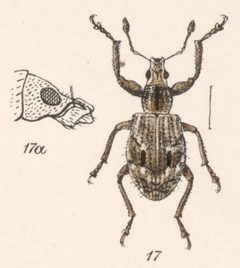
Distinguished from similar broad-nosed weevils by the combination of a triangular, large, glabrous, shiny nasal plate that is elevated above the rostrum surface, plus mandibular scars that project from the surface. A key to Central American was published by Champion (1911).
Images
Appearance
Small beetles measuring approximately 6 to 12 mm in length. The nasal plate is triangular, large, glabrous, shiny, and distinctly elevated from the surface of the rostrum. Mandibular scars are projected from the surface of the .
Distribution
Ranges from Texas through Bolivia, with particular diversity across the Caribbean islands. occur in Guatemala, Rica, Panama, El Salvador, Honduras, Nicaragua, Mexico, Belize, Cuba, Dominica, Guadeloupe, Grenada, Puerto Rico, Saint Vincent, Colombia, and Bolivia.
Similar Taxa
- PandeleteiusSynonymized (P. depressifrons) were formerly placed here; Polydacrys differs in nasal plate and mandibular scar
- Tanymecini membersPolydacrys was formerly classified in this tribe; reassigned to Anypotactini based on morphological characters
More Details
Taxonomic history
Originally described by Schönherr in 1834. Previously considered a member of tribe Tanymecini, now placed in Anypotactini. Champion (1911) provided the only published -level key for Central American .
Species diversity
Eight described are currently recognized, with the highest concentration in Central America and the Caribbean.