
Smicronyx centralis
Anderson, 1962
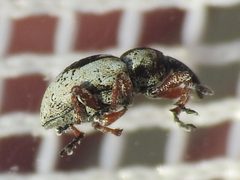
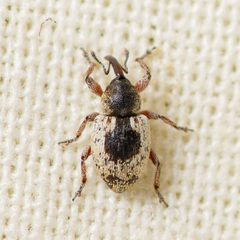
Smicronyx centralis is a of true weevil in the Curculionidae, described by Anderson in 1962. It is known from North America, with confirmed records from the Canadian provinces of Alberta and Saskatchewan. Like other members of the Smicronyx, it is likely associated with sunflower plants (Helianthus spp.), though specific ecological details for this species remain poorly documented. The genus includes economically important seed weevils that are pests of cultivated sunflower crops.

Pronunciation
How to pronounce Smicronyx centralis: /ˌsmaɪˈkrɒnɪks sɛnˈtreɪlɪs/
These audio files are automatically generated. While they are not always 100% accurate, they are a good starting point.
Images
Distribution
North America, with confirmed records from Alberta and Saskatchewan, Canada. The full extent of its range within North America is not well documented.
Host Associations
- Helianthus annuus - probableBased on -level association; specific records for S. centralis are not documented in available sources.
Similar Taxa
- Smicronyx fulvusRed sunflower seed weevil, a congeneric that is a documented pest of sunflower crops; S. centralis may be confused with this species due to shared and probable similar association.
- Smicronyx sordidusGray sunflower seed weevil, another congeneric seed weevil pest of sunflowers; morphological and ecological similarities may cause confusion with S. centralis.
More Details
Taxonomic note
The was described by Anderson in 1962. It is provisionally accepted in the Catalogue of Life, indicating that its taxonomic status may require further verification.
Data deficiency
Despite 12 observations recorded in iNaturalist, detailed ecological information specific to S. centralis is lacking in the primary literature. Most available information on Smicronyx pertains to the economically significant S. fulvus and S. sordidus.