Tachyerges ephippiatus
(Say, 1831)
Tachyerges ephippiatus is a of weevil in the Curculionidae. It is distributed across central and eastern Canada, with records from Alberta, British Columbia, Manitoba, New Brunswick, and Nova Scotia. The Tachyerges includes species associated with conifers, though specific ecological details for this species remain limited in published literature.
Pronunciation
How to pronounce Tachyerges ephippiatus: /tæˈkhaɪərdʒiːz ɛˌfɪpiˈeɪtəs/
These audio files are automatically generated. While they are not always 100% accurate, they are a good starting point.
Identification
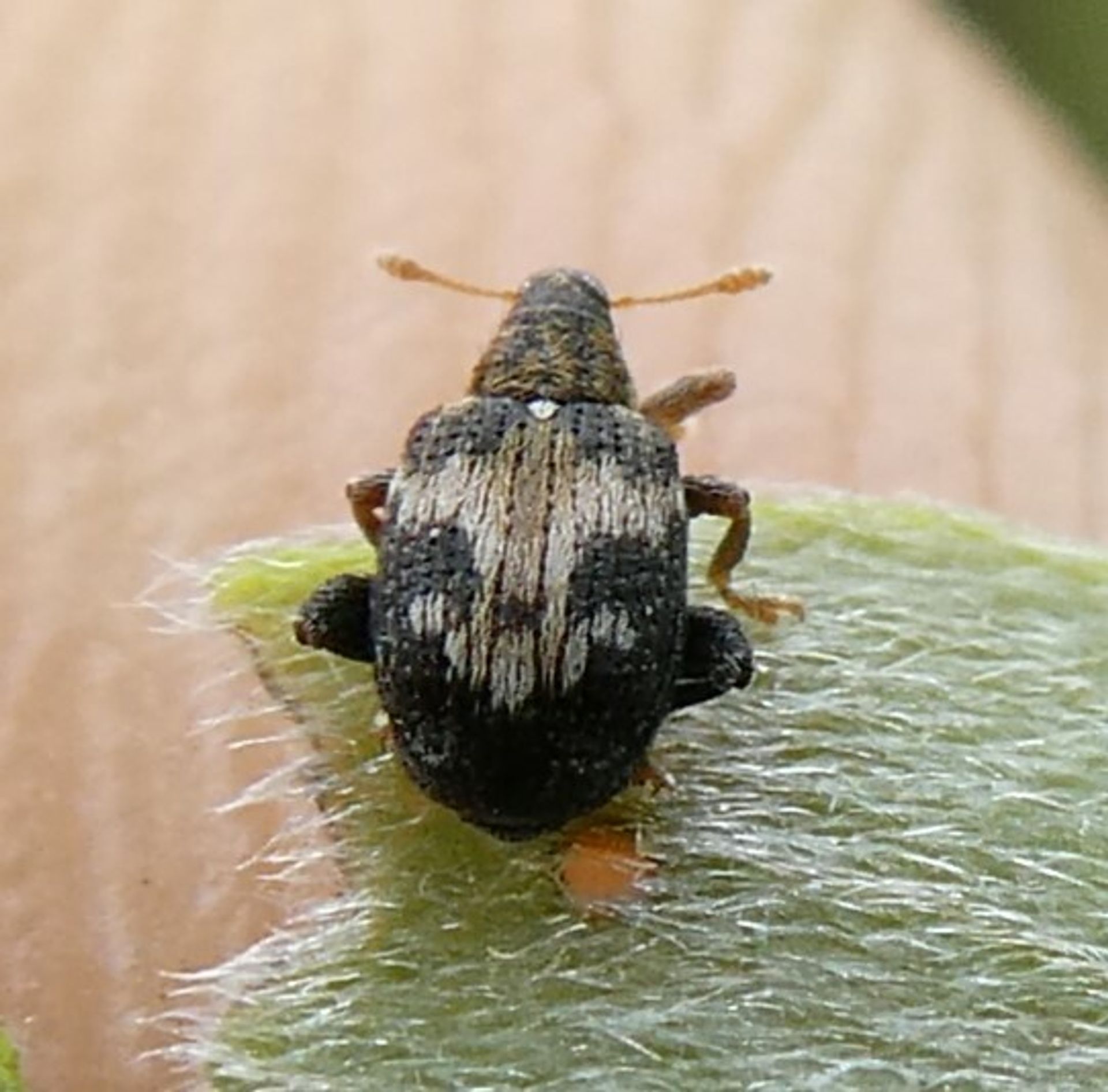
As a member of the Tachyerges, this possesses the characteristic elongated rostrum (snout) typical of Curculionidae. Distinguishing T. ephippiatus from such as T. salicis and T. stigma requires examination of subtle morphological features including elytral patterning, punctation , and male genitalia. The specific epithet 'ephippiatus' (saddle-shaped) may refer to a distinctive marking, though this requires verification against .
Images
Habitat
Based on -level associations, Tachyerges inhabit coniferous forests. The recorded distribution across and hemiboreal regions of Canada suggests to spruce, fir, and pine-dominated .
Distribution
Canada: Alberta, British Columbia, Manitoba, New Brunswick, Nova Scotia. The appears restricted to Canadian territory with no confirmed United States records in available databases.
Host Associations
- Picea - probable Tachyerges includes associated with spruce; specific for T. ephippiatus unconfirmed
- Abies - probable-level association based on congeneric
- Pinus - probable-level association based on congeneric
Similar Taxa
- Tachyerges salicisOverlaps in distribution; distinguished by preference (Salix vs. conifers) and subtle rostral proportions
- Tachyerges stigmaSimilar size and coloration; requires examination of elytral strial punctation and genitalia for reliable separation
More Details
Nomenclatural note
Authority cited as (Say, 1831) in NCBI and (Say, 1832) in GBIF; original publication date requires verification. Basionym Orchestes ephippiatus indicates historical placement in a different .
Data limitations
Despite 54 iNaturalist observations, published biological and ecological studies specific to this are scarce. Most ecological inference derives from -level characterization.