
Coccotorus
LeConte, 1876
plum gouger
Species Guides
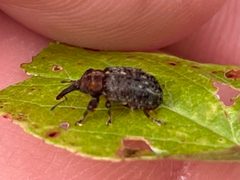
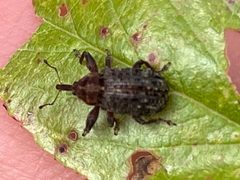
4Coccotorus is a of true weevils in the Curculionidae, containing approximately six described . The genus is placed in the tribe Anthonomini within the Curculioninae. Some species are associated with gall formation on plants. One species, C. beijingensis, has been studied for its complete mitochondrial and its phylogenetic relationship to the genus Anthonomus.
Pronunciation
How to pronounce Coccotorus: //ˌkɒk.kəˈtɔː.rəs//
These audio files are automatically generated. While they are not always 100% accurate, they are a good starting point.
Images
Habitat
Associated with woody plants; C. beijingensis has been documented on Celtis bungeana trees in northern China, including forest park settings.
Distribution
Northern China (C. beijingensis); distribution of other not well documented in available sources.
Seasonality
C. beijingensis: in September, with mating in late March and -laying in early April in the Beijing area.
Diet
Herbivorous; C. beijingensis feeds on plant tissue of Celtis bungeana (Ulmaceae).
Host Associations
- Celtis bungeana - monophagous; causes gall formation on shoots
Life Cycle
C. beijingensis produces one per year: laid in early April, larvae hatch after ten days and induce gall formation, in August, in September. Adults create circular exit holes (~2 mm diameter) in galls.
Behavior
C. beijingensis males enter females' galls to mate. Larval feeding stimulates rapid tissue proliferation and gall expansion on shoots, causing dead branches and affecting branch growth.
Ecological Role
Herbivorous pest of Celtis bungeana, a landscape and garden tree ; impacts tree growth and health through gall formation and branch damage.
Human Relevance
C. beijingensis is considered a pest of Celtis bungeana, which is valued as a garden and landscape tree in China.
Similar Taxa
- AnthonomusPhylogenetic analyses based on mitochondrial data suggest Coccotorus may be nested within Anthonomus, though additional sampling is needed for confirmation.
More Details
Taxonomic Uncertainty
Phylogenetic analyses based on mitochondrial data suggest Coccotorus may be nested within Anthonomus, indicating potential need for taxonomic revision. More extensive sampling is required to confirm this relationship.
Species Diversity
The contains approximately six described : C. chaoi, C. hirsutus, C. pruniphilus, C. pumilae, C. requiescens, and C. scutellaris (the plum gouger). Detailed biological information is available primarily for C. beijingensis.
Gall Formation
C. beijingensis induces distinct galls on plant shoots through larval feeding activity, with galls becoming fully lignified by July. This represents a specialized plant-insect interaction with measurable impacts on host architecture.