
Peltophorus polymitus
Boheman, 1845
Speckled Agave Weevil
Species Guides
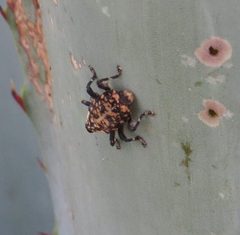
2Peltophorus polymitus is a true weevil (Curculionidae) native to North America, widely distributed throughout Mexico. and larvae feed on multiple agave , including cultivated plants used for food, medicine, and mezcal production. Despite causing documented plant damage, it has not been formally classified as a pest species. Two are recognized: P. p. seminiveus and P. p. suffusus.

Pronunciation
How to pronounce Peltophorus polymitus: /pɛlˈtɒfərəs pɒˈlɪmɪtəs/
These audio files are automatically generated. While they are not always 100% accurate, they are a good starting point.
Images
Habitat
Agave areas and wild agave plantations, particularly in regions where agave are grown for agricultural or commercial purposes. Associated with plants in both managed and natural settings.
Distribution
North America, with confirmed records throughout Mexico including Michoacán and Durango. Distribution extends across multiple Mexican states where agave occur.
Diet
and larvae feed on agave plant tissue, specifically leaves and needles. Documented feeding on Agave angustifolia, A. cupreata, A. durangensis, A. inaequidens, A. kerchovei, A. palmeri, and A. tequilana.
Host Associations
- Agave angustifolia - plantcultivated
- Agave cupreata - plantcultivated
- Agave durangensis - plantcultivated
- Agave inaequidens - plantwild plantation, Michoacán; first documented occurrence reported 2019
- Agave kerchovei - plantcultivated
- Agave palmeri - plantcultivated
- Agave tequilana - plantcultivated; used for tequila production
Life Cycle
Both and larval stages are present simultaneously in plant . A single study site recorded 166 adults and 172 larvae, indicating overlapping or extended breeding periods. Specific developmental stages and duration unknown.
Behavior
Causes visible damage to agave plants through feeding activity on leaves and needles. Not formally considered an agricultural pest despite consistent association with cultivated agave and documented economic impact on plants used for mezcal production.
Ecological Role
Herbivore specializing on agave . Potential economic pest of agave crops, particularly affecting rural dependent on agave for food, medicinal purposes, and mezcal production.
Human Relevance
Negative economic impact on agave , particularly for mezcal and tequila production industries. Affects rural using agave for subsistence and commercial purposes. Not formally recognized or managed as a pest despite documented damage.