
Cylindrocopturinus
Sleeper, E.L., 1963
Species Guides
1Cylindrocopturinus is a of true weevils (Curculionidae) established by E.L. Sleeper in 1963. The genus contains at least four described , all native to North America. Species in this genus are relatively small and understudied, with limited ecological data available. The genus name references the cylindrical body form typical of its members.
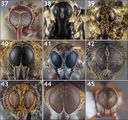
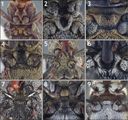
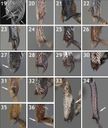
Pronunciation
How to pronounce Cylindrocopturinus: //sɪˌlɪn.droʊ.kɒpˈtjʊr.ɪ.nəs//
These audio files are automatically generated. While they are not always 100% accurate, they are a good starting point.
Identification
Members of Cylindrocopturinus can be recognized by their cylindrical body shape, a trait reflected in the name. The rostrum (snout) is moderately elongated relative to body size. Specific identification to level requires examination of genitalia and subtle differences in elytral and coloration pattern. C. pictus is distinguished by its patterned , while other species are more uniformly colored.
Images
Distribution
North America; have been recorded from the southwestern United States and Mexico.
Similar Taxa
- CylindrocopturusSimilar name and cylindrical body form; distinguished by differences in rostral structure and male genitalia.
- CopturusOverlapping distribution and general weevil ; Cylindrocopturinus are generally smaller with more slender rostrum proportions.
More Details
Taxonomic history
The was erected by E.L. Sleeper in 1963 to accommodate previously placed in related genera. Two species were described by Anderson in 1994 (C. catherineae and C. vanessae), and C. hainesi was described by Hespenheide in 1984.
Data limitations
No observations are recorded in iNaturalist as of the knowledge cutoff, indicating this is rarely encountered or underreported by naturalists.